



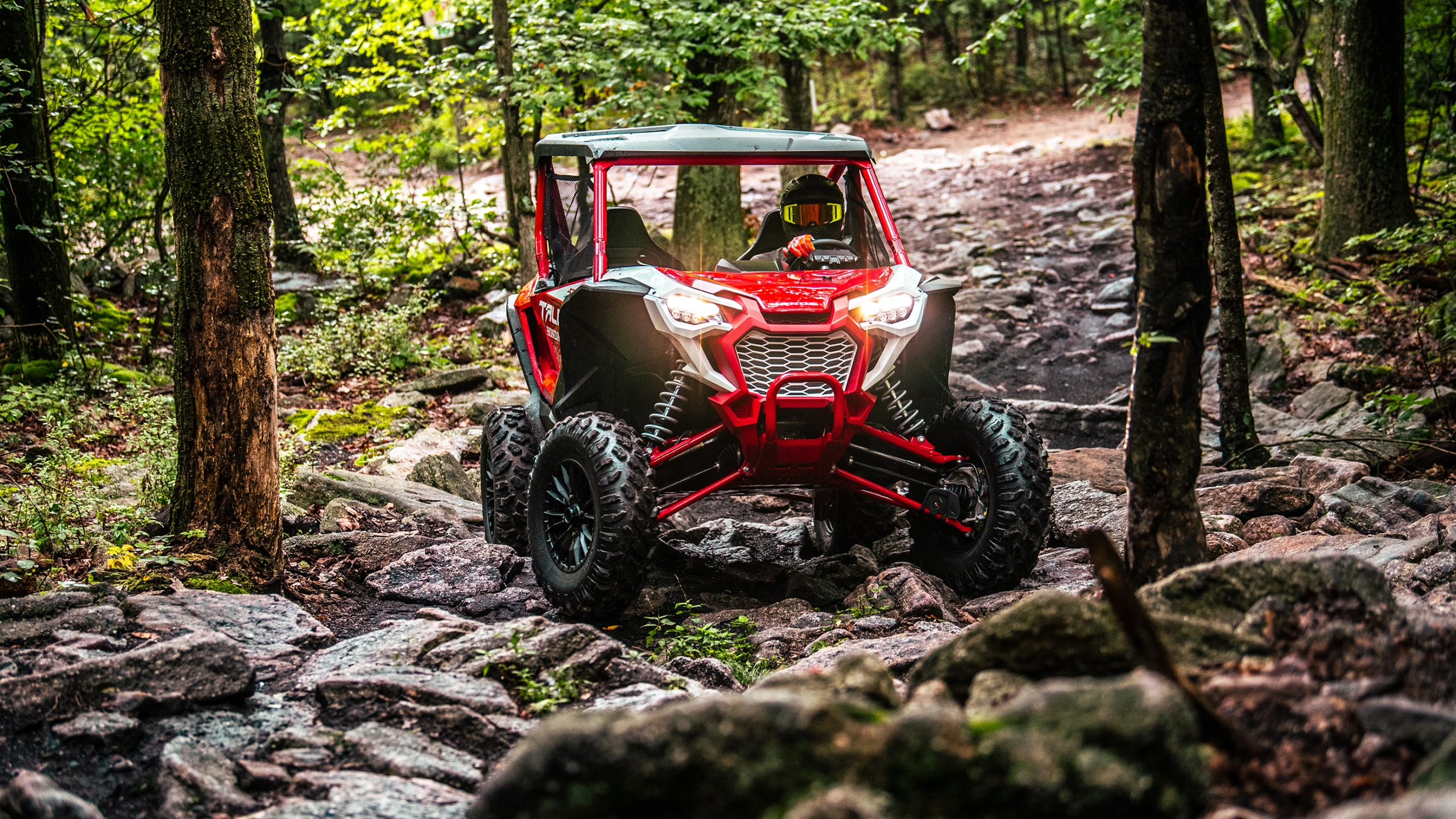
The 2026 Honda Talon 1000R FOX Live Valve Review takes a closer look at a sport side-by-side that continues to do things differently from much of its competition. Honda entered the pure sport UTV market later than most manufacturers when it introduced the Talon in 2019. By that point, Polaris, Can-Am and Yamaha had already spent years battling for buyers in a segment that was growing incredibly fast. Honda may have arrived late, but it brought something nobody else had: a six-speed Dual Clutch Transmission (DCT) in place of the belt-driven continuously variable transmissions used by virtually everyone else. Seven years later, that transmission still gives the Talon a unique driving experience. Perhaps just as importantly, Honda has managed to keep the price from getting completely out of hand.
2026 Honda Talon 1000R FOX Live Valve Review
Top Features
- 999cc liquid-cooled Unicam parallel-twin engine
- Six-speed automatic Dual Clutch Transmission (DCT)
- Steering-wheel-mounted paddle shifters
- FOX Live Valve semi-active suspension
- Normal and Sport suspension modes
- 17.6 inches of front suspension travel
- 20.1 inches of rear suspension travel
- New 30-inch tires on 15-inch wheels
- 68.1-inch-wide chassis
- 13.2 inches of ground clearance
- Honda i-4WD traction management system
- Electric power steering
- Full-coverage hard doors with storage
- Adjustable driver’s seat
- MSRP: $23,799
2026 Honda Talon 1000R FOX Live Valve Review
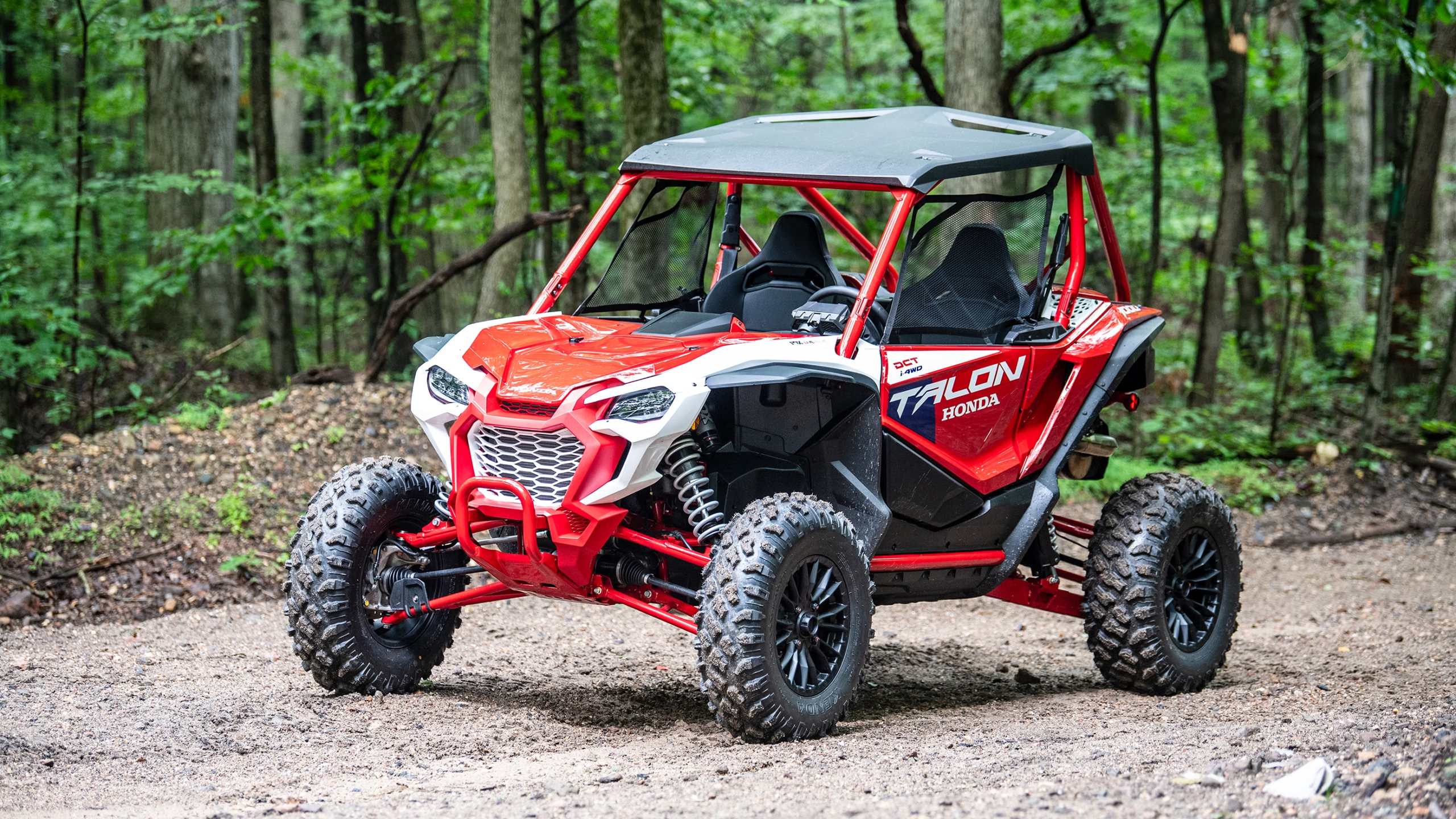


There is no drive belt to break or replace. Instead, the Talon has actual gears, real shifts and a pair of paddle shifters behind the steering wheel that let the driver get involved whenever the mood strikes. The transmission can also be left in automatic mode, where Honda’s Advanced Transmission Logic handles the shifting. The DCT gave the Talon a personality completely different from anything else in the class when it debuted, and it remains one of the biggest reasons to consider one today.
My latest long-term demo is a 2026 Honda Talon 1000R FOX Live Valve. At $23,799, it certainly isn’t cheap, but that number looks increasingly reasonable in a sport UTV market where spending $30,000 or considerably more has become surprisingly easy. For the money, the Talon includes FOX Live Valve semi-active suspension, Honda’s i-4WD system, electric power steering and, of course, that six-speed DCT.
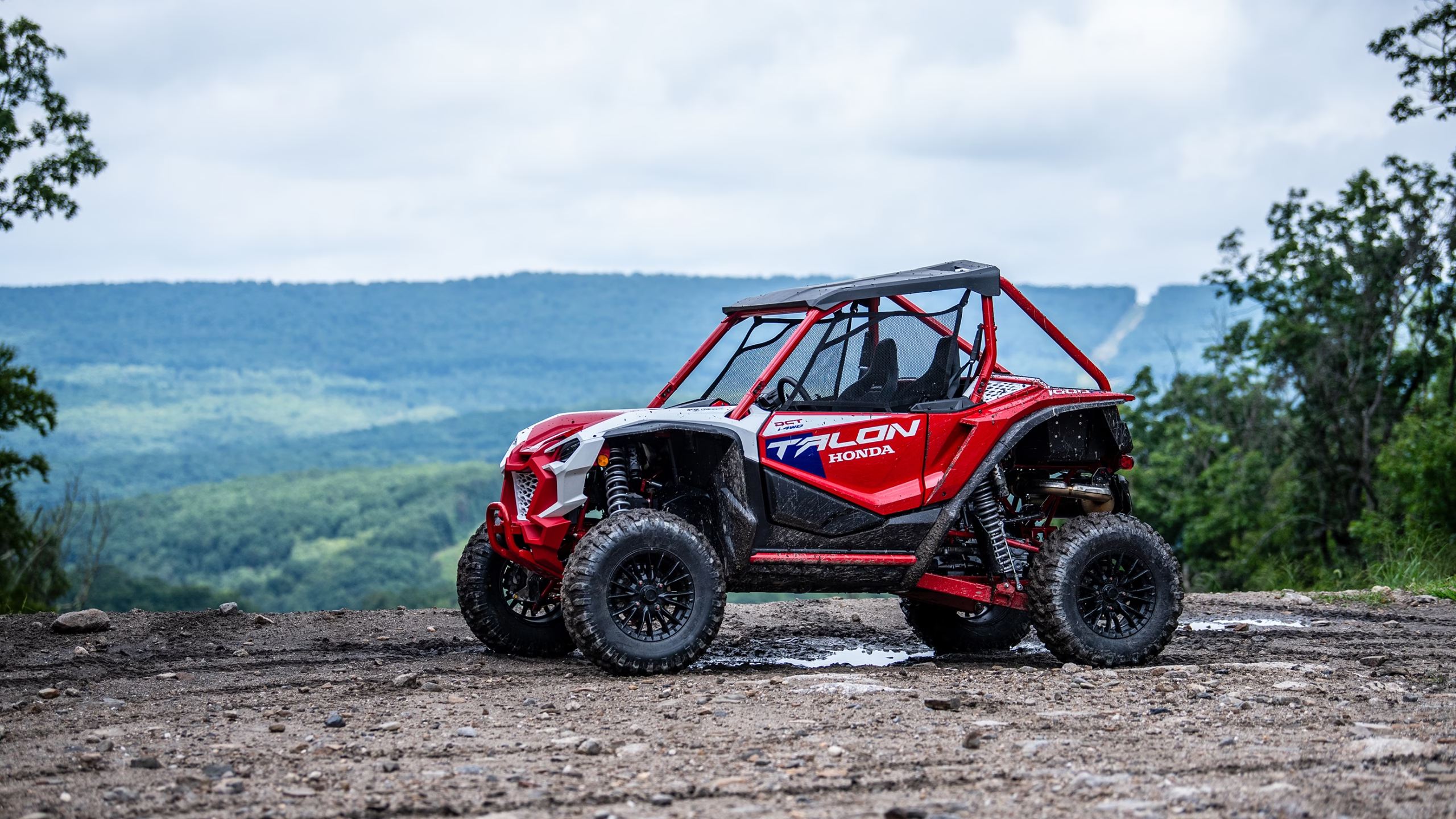
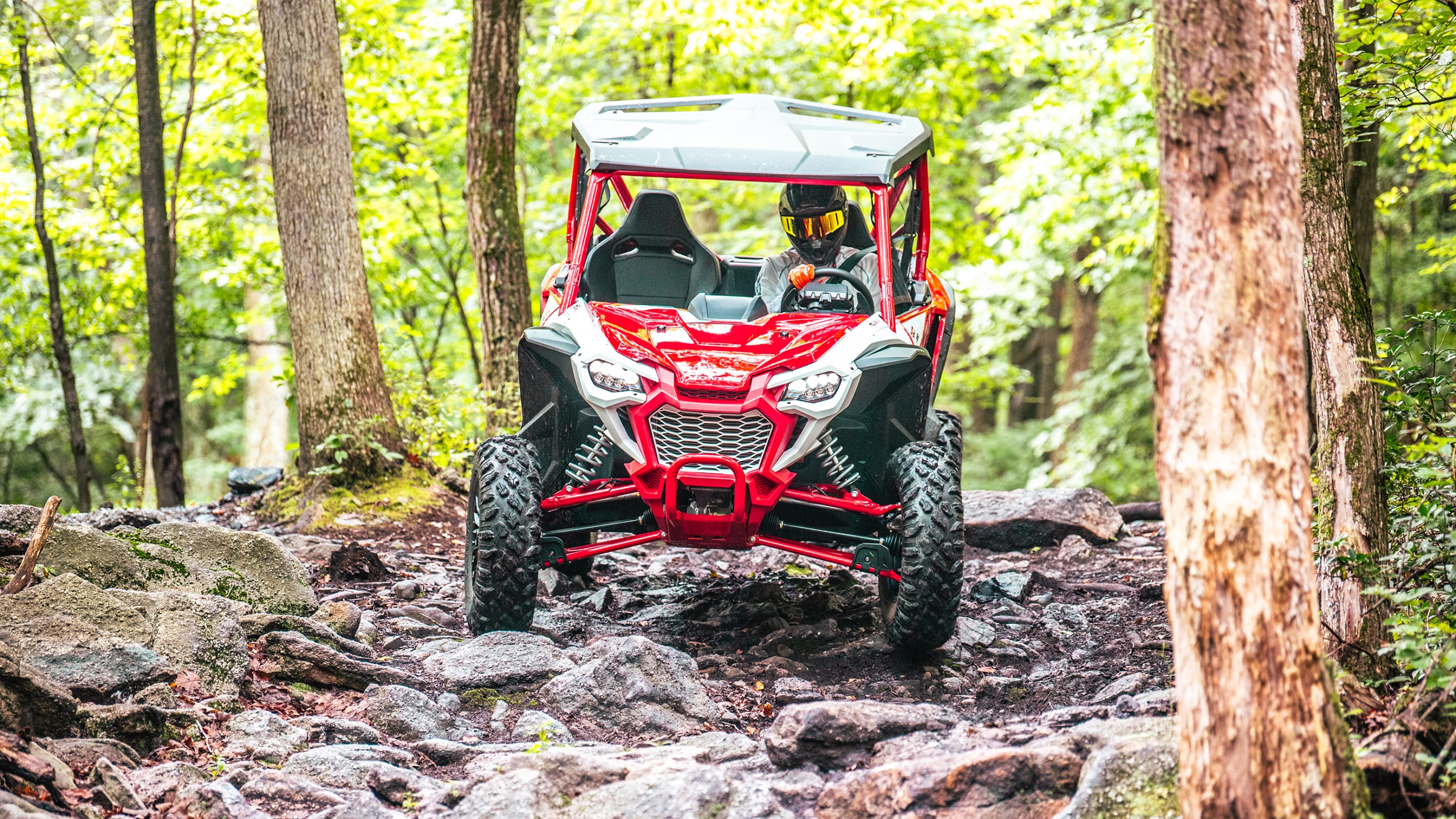
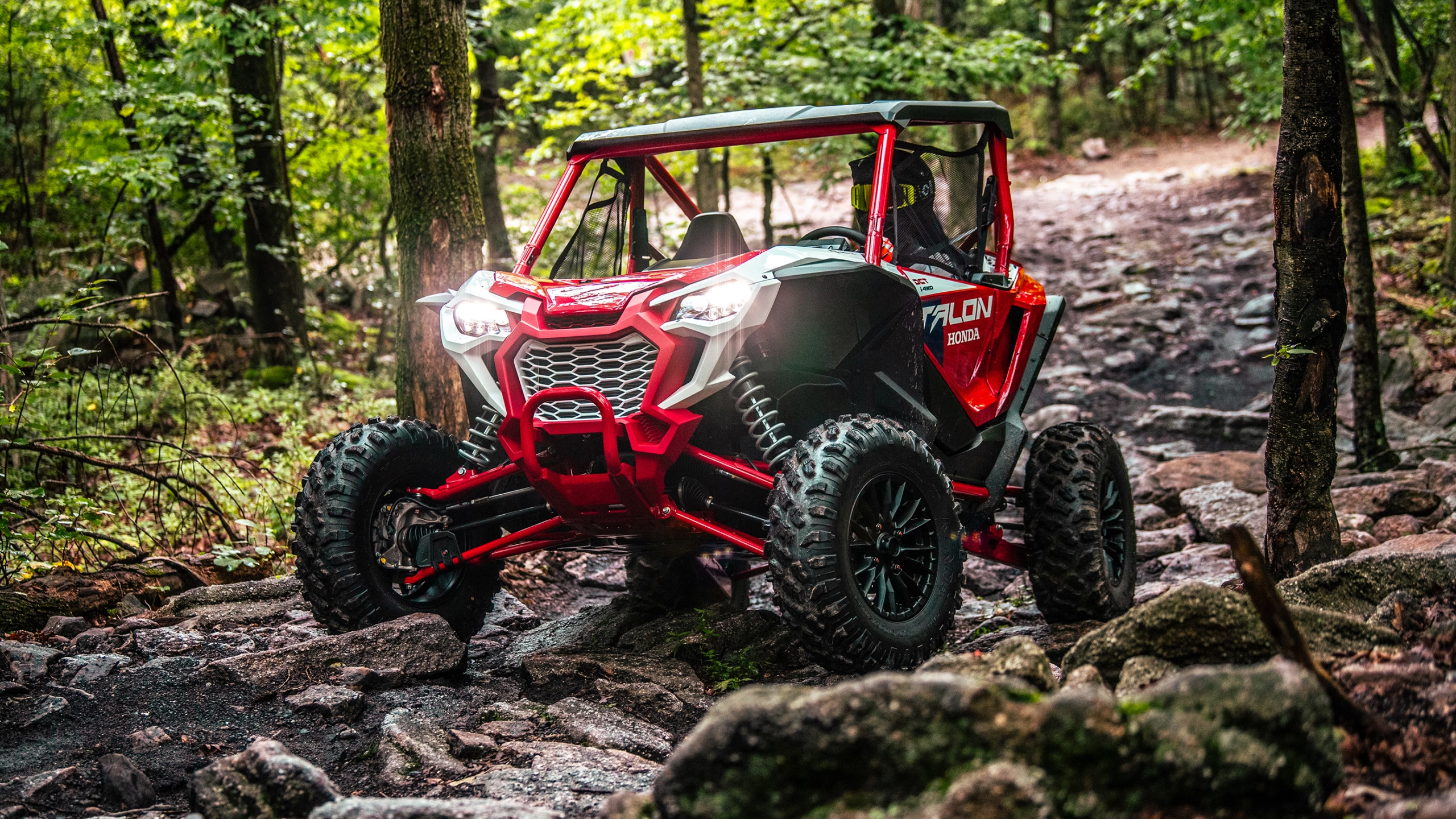
Mine is finished in Honda’s Pearl Red color scheme, complete with red, white and blue graphics that might be one of my favorite color combinations Honda has put on a Talon. It has gotten countless compliments both on the trail and sitting on my trailer. The red, white and blue also reminds me of the vintage Honda three- and four-wheelers that are etched into my memory from the 1980s. Maybe I am exactly the demographic Honda was aiming for with this one.
The Talon has evolved since its introduction, but Honda has resisted the urge to completely reinvent it. In typical conservative Honda fashion, the company has continued refining a proven platform while many competitors have chased more horsepower, more suspension travel and increasingly higher price tags. As we covered in our 2026 Honda Talon Updates, Honda focused on meaningful refinements, including larger 30-inch tires for the Talon R models.
After spending time behind the wheel, I am reminded why Honda’s formula still works and why the Talon 1000R FOX Live Valve continues to be a machine I would seriously consider purchasing myself.
For more Honda side-by-side coverage, visit our Honda UTV reviews and buyer’s guides.
2026 Honda Talon 1000R FOX Live Valve Review
999cc Honda Talon Engine Performance
Power comes from Honda’s longitudinally mounted 999cc, liquid-cooled, fuel-injected parallel-twin four-stroke engine. Honda does not advertise a horsepower number for the Talon, but the engine shares its basic architecture with the powerplant used in the Africa Twin motorcycle and delivers plenty of naturally aspirated power.
The sport UTV market has become obsessed with horsepower. Turbochargers, enormous tires and horsepower numbers approaching 300 have changed the segment dramatically. The Talon 1000R has remained true to its roots and isn’t trying to compete in that battle.
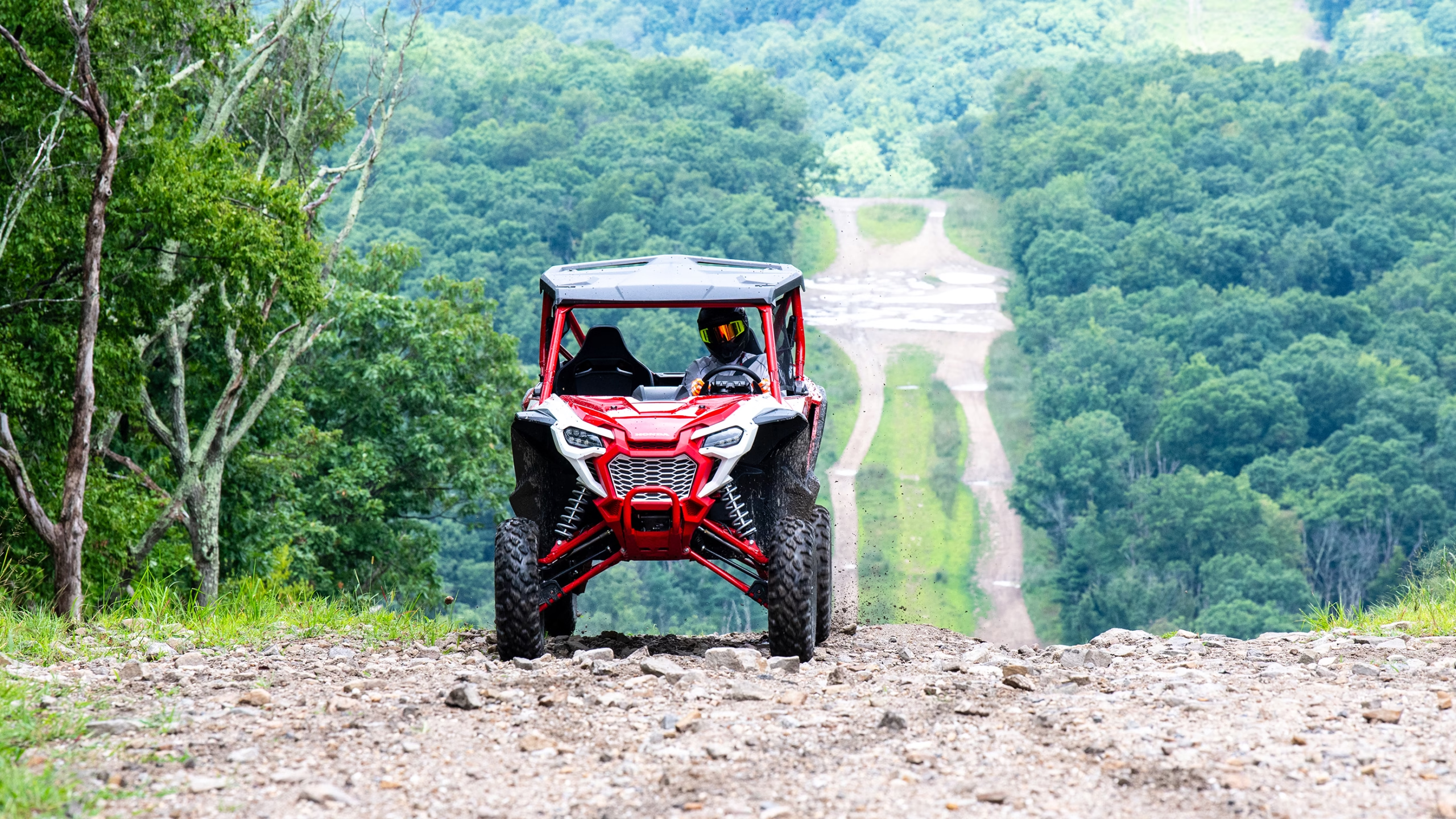
Instead, Honda has built an engine that feels incredibly responsive and usable. Throttle response is crisp, power builds predictably, and there is plenty of torque throughout the rpm range to make the Talon genuinely fun in the tight woods where I spend most of my time riding.
The engine also likes to rev. Get your foot into the throttle and it pulls hard toward redline with a sound that becomes even better once the transmission starts working through the gears.
However, my favorite characteristic may be what happens at the other end of the rpm range. I can roll into a corner in a tall gear, get back into the throttle and let the twin-cylinder engine lug its way out with torque characteristics that feel like a diesel. It is surprisingly happy doing either.
That brings us to what I believe is still the best part of the Talon.
2026 Honda Talon 1000R FOX Live Valve Review
Six-Speed Dual Clutch Transmission: Still the Talon’s Biggest Advantage
When Honda introduced the Talon in 2019, its six-speed Dual Clutch Transmission was unlike anything else in the sport UTV market. While virtually everyone else relied on belt-driven CVTs, Honda went with actual gears and two clutches.
Can-Am has since followed a similar path with the seven-speed DCT found in the Maverick R, but Honda deserves credit for bringing the concept to the sport UTV market years earlier. We’ve been following Honda’s approach to performance for years, including our 2021 Honda Talon 1000R Review, when FOX Live Valve suspension and launch control were among the biggest upgrades to the two-seat sport UTV.
There is no belt. There are actual gears, two clutches and real gear changes.
Leave the transmission in automatic and Honda’s Advanced Transmission Logic decides when to shift based partly on how aggressively you are driving. Start pushing harder and it holds gears longer. Back off and cruise, and the transmission settles down with you.
If you want more control, paddle shifters allow you to select gears manually. I love this transmission, and after spending more time in the Talon, I might like it even more than I did when Honda first introduced it.
I’ll admit that I am probably the target audience for something like this. I am firmly in the “Save the Manuals” camp. There is a manual-transmission Civic Si and Corvette Z06 sitting in my garage for exactly that reason.
No, the Talon’s DCT isn’t a manual transmission, but the appeal is similar. I like being involved in what the machine is doing.
Mash the throttle and you can hear and feel the Talon rip through the gears. Lift going into a corner and there is genuine engine braking. Drop a gear with the paddle and the engine responds almost immediately.
There is a mechanical connection between the engine and the wheels that you simply don’t get from a conventional CVT.
Is the DCT necessarily faster than the latest high-horsepower CVT machines? No. That’s really not the point, though.
The DCT makes the Talon more engaging to drive, and it allows you to interact with the engine in ways that simply aren’t possible with a conventional CVT.
The Talon makes driving fun, which is the whole point!
2026 Honda Talon 1000R FOX Live Valve Review
FOX Live Valve Suspension: Better the Harder You Drive
The Talon 1000R is the wider, longer-travel version of Honda’s two-seat sport UTV. At 68.1 inches wide, it trades some of the tight-trail maneuverability of the 64-inch 1000X for considerably more suspension travel and stability as speeds increase.
For the type of riding I normally do, I’ll gladly make that trade. Most of the trails where I ride are wide enough to accommodate 72-inch UTVs, so I actually prefer the wider stance of the Talon R.
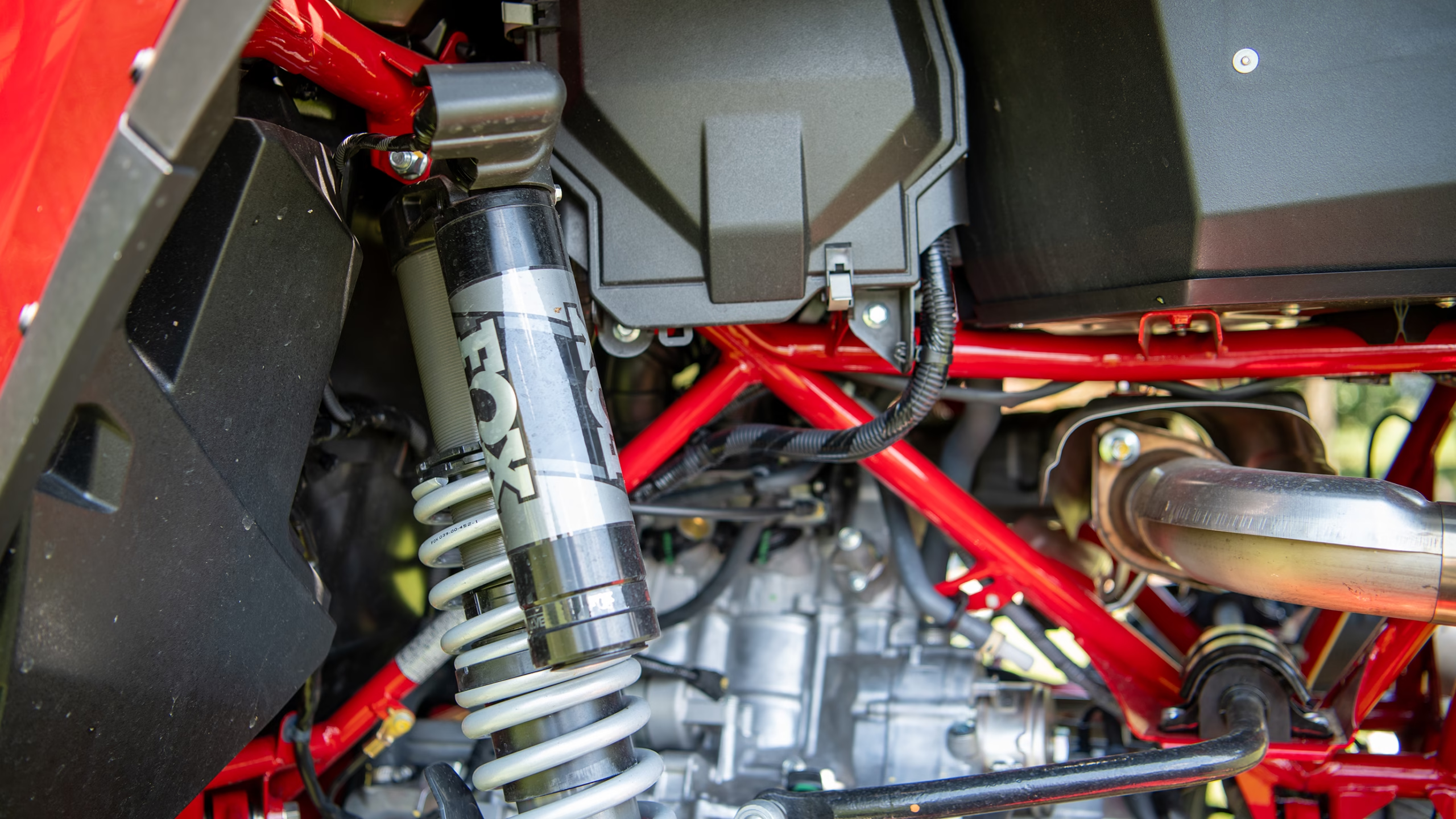
Up front, the R uses independent double-wishbone suspension with FOX Live Valve shocks and 17.6 inches of travel. The rear is where things get particularly interesting. Honda uses its 4+ link trailing-arm suspension with 20.1 inches of travel, giving the R more than five additional inches of rear-wheel travel compared with the 1000X.
The FOX Live Valve system continually adjusts compression damping at each corner based on what the Talon is doing. Sensors monitor things like steering input, braking, vehicle movement and information from the engine and transmission, allowing the system to make suspension adjustments before I have much time to think about what is happening underneath me.
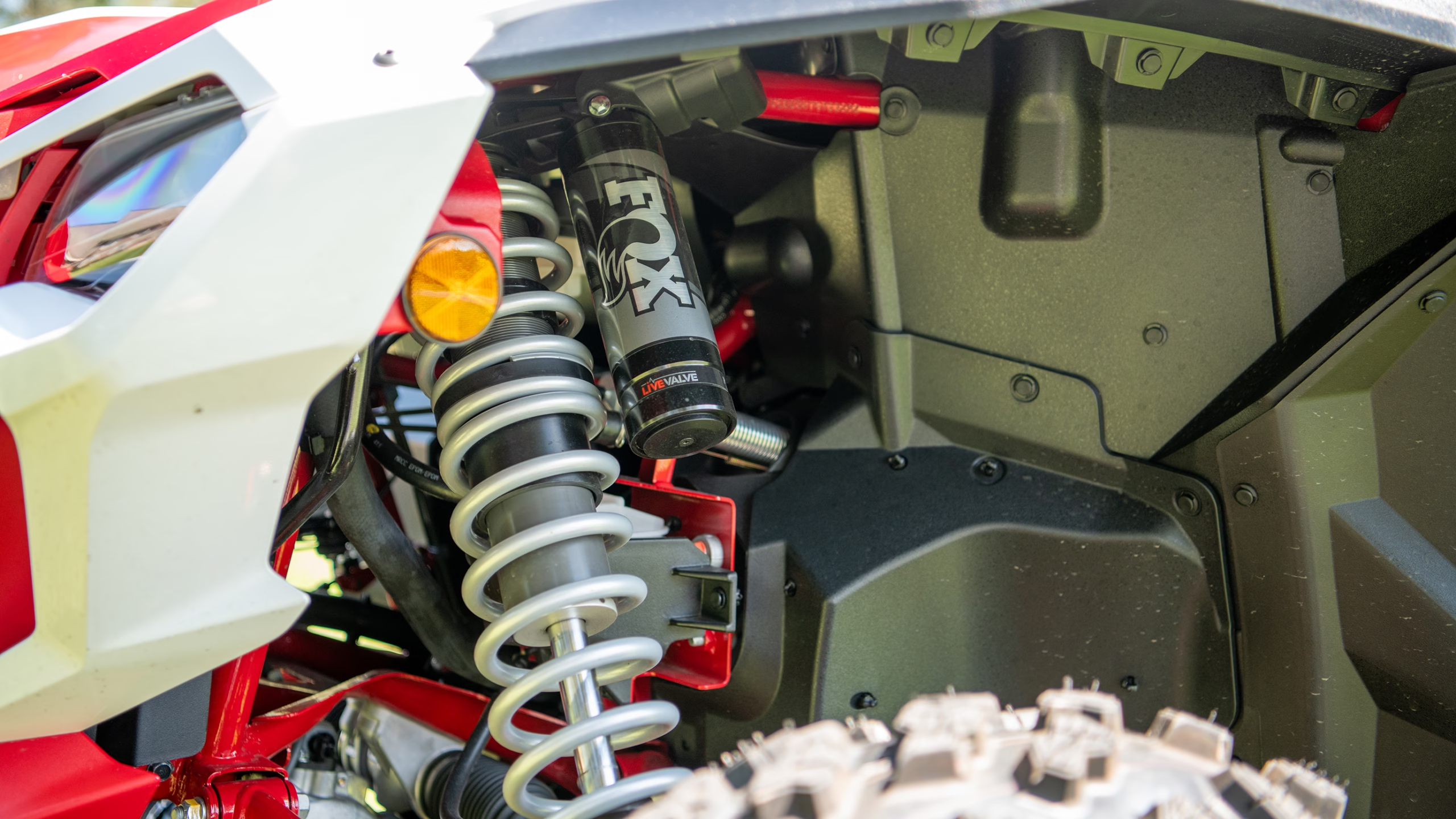
We’ve also spent considerable time with the four-seat version, and our 2026 Honda Talon 1000R Review revealed a similar suspension characteristic. The FOX Live Valve setup can feel firm at slower speeds, but the chassis becomes increasingly composed and predictable as the pace picks up.
There are two selectable settings, Normal and Sport, but there is something important to understand about the Talon 1000R.
This isn’t a suspension package designed primarily to make the machine feel soft and cushy while putting around.
At slower speeds, especially over rocks, roots and sharp trail chop, the suspension can feel firm. Simply put, you know what the tires are driving over. Initially, that surprised me considering the amount of suspension travel available.
However, once you pick up the pace, everything starts making a lot more sense.
The harder I drive the 1000R, the better the suspension seems to work. Bigger hits that look like they should upset the machine are swallowed up with surprisingly little drama. Body roll is well controlled, the rear stays planted, and the chassis seems increasingly comfortable as speeds rise.
Instead of reaching the limits of the suspension as I push harder, I find myself getting closer to the limits of how hard I am willing to push the machine.
That might be the best way I can describe the 1000R’s suspension. It isn’t necessarily trying to isolate you from the trail. Instead, it is trying to give you the control and confidence to attack it faster.
For where and how I ride, I’ll take the additional width, travel and stability of the 1000R.
2026 Honda Talon 1000R FOX Live Valve Review
New 30-Inch Tires Improve Handling and Ground Clearance
One of the more significant changes Honda made to the Talon 1000R for 2026 is easy to spot.
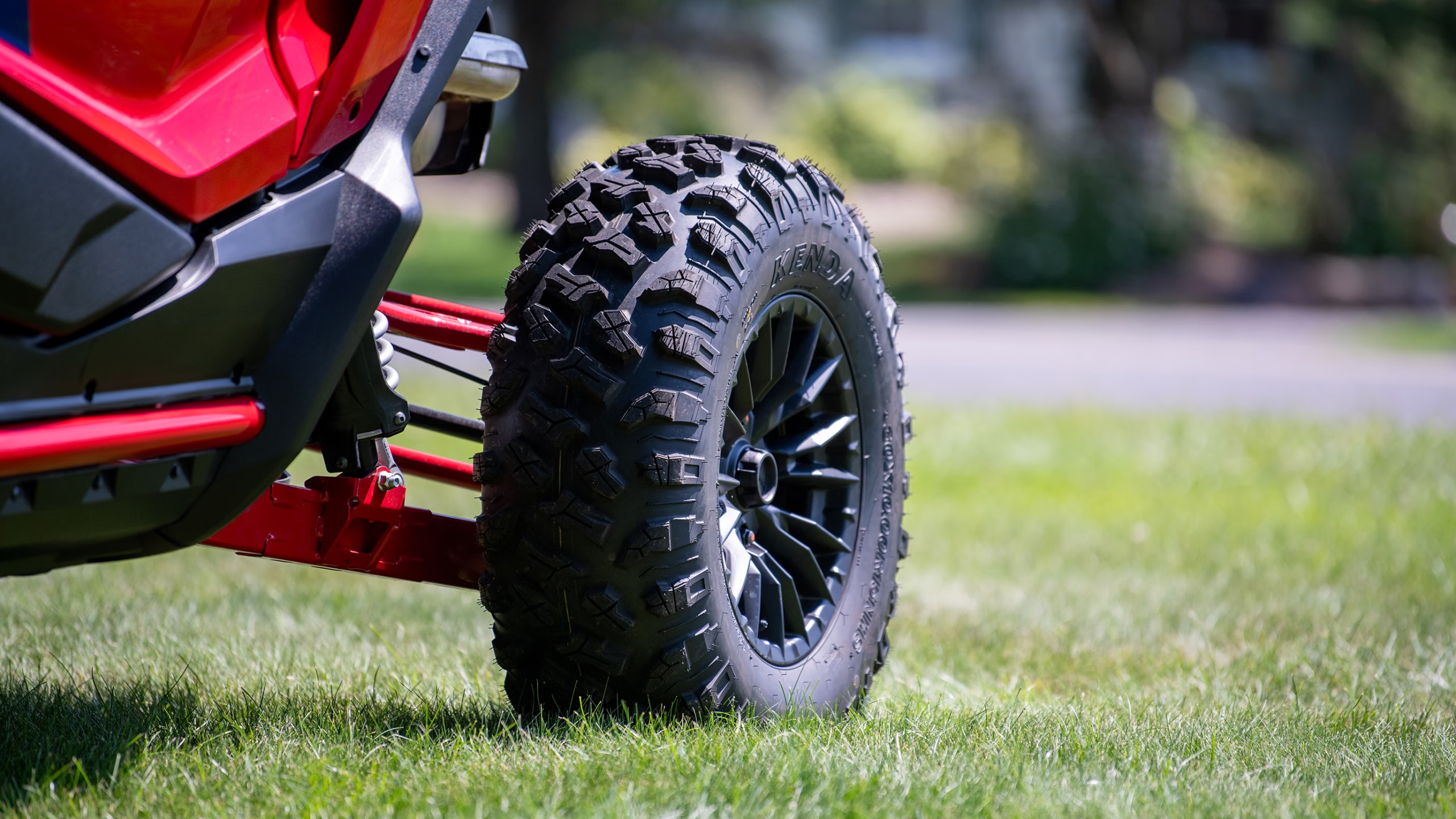
The previous 28-inch tires have been replaced by 30-inch tires mounted on 15-inch wheels. The larger tires also help increase ground clearance to 13.2 inches, a welcome improvement for anyone who regularly deals with rocks, roots and deep ruts.
I think the 30-inch tires simply make more sense on a machine with this much suspension capability. They provide a larger footprint, roll over trail obstacles more easily and look much more appropriate underneath the Talon’s 68.1-inch-wide chassis.
We’ve also experimented with larger tires on the four-seat Talon. In our Putting 32-Inch Tires on Our Honda Talon 1000R4 test, we found that moving beyond the factory 30-inch tires provided additional ground clearance and improved comfort in rocky terrain.
More importantly, Honda managed to increase tire size without turning the Talon into one of the oversized machines that have become increasingly common in the sport UTV market.
Combined with the 90-inch wheelbase and wider stance, the Talon R feels extremely planted.
Steering remains precise, and the machine changes direction predictably without requiring a wrestling match with the steering wheel.
In tighter sections I am certainly aware that I’m driving the wider Talon, but on the trails where I normally ride, that hasn’t been much of a disadvantage.
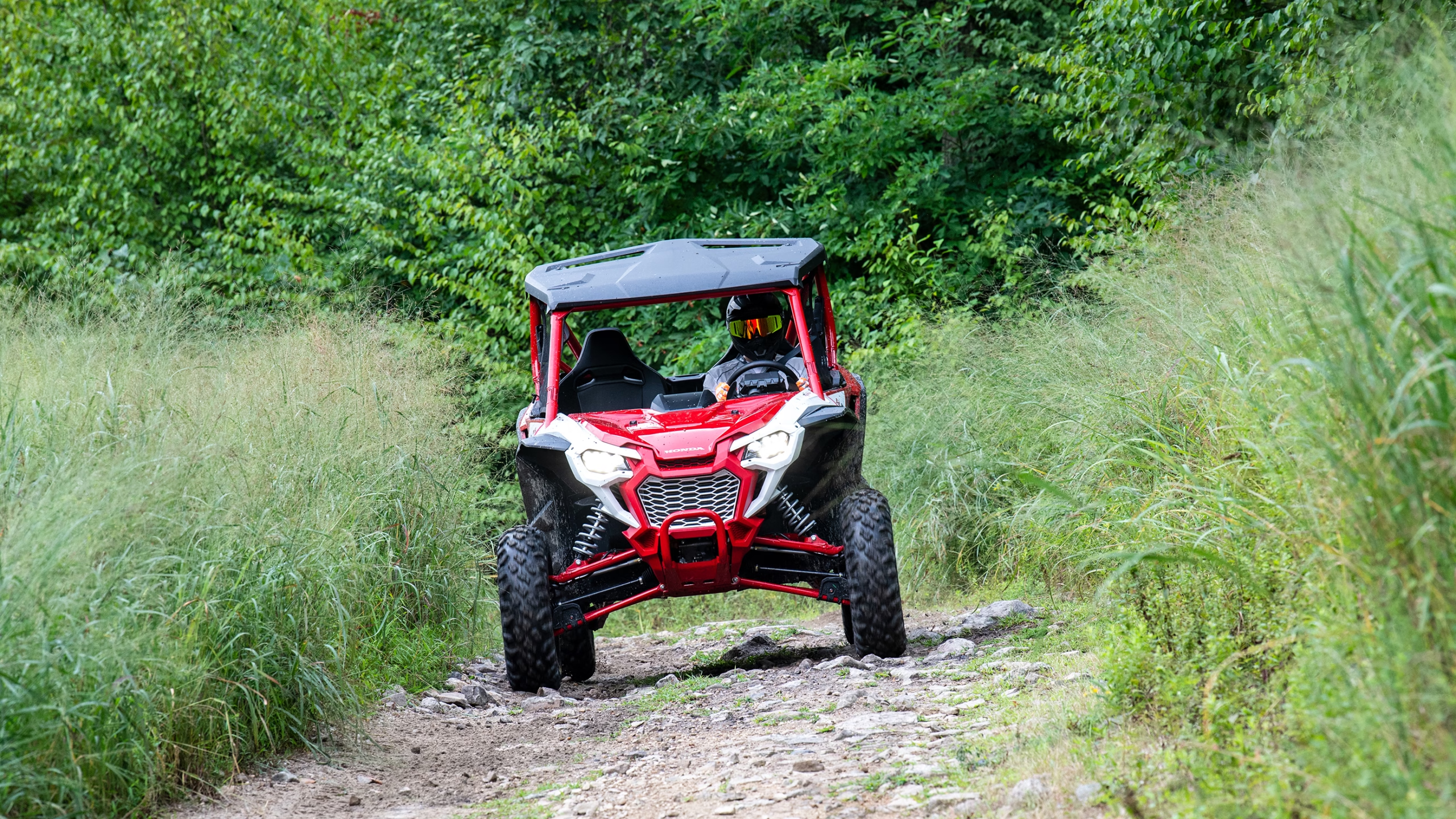
Once the trail opens up, the additional width becomes something I appreciate. The R feels stable at speed, stays remarkably flat through corners and gives me the confidence to carry considerably more speed than I initially expect.
2026 Honda Talon 1000R FOX Live Valve Review
Interior Comfort, Hard Doors and Driver Ergonomics
Honda interiors generally make sense, and the Talon is no exception.
The driving position feels natural, controls are easy to understand, and visibility is excellent.
The 2026 machine also has full-coverage hard doors, something I appreciate on our muddy Pennsylvania trails. The doors include useful storage and cupholders and close with a solid feel that you expect from Honda.
The driver’s seat is adjustable, and Honda’s electric power steering provides plenty of assistance without completely disconnecting the driver from what the front tires are doing.
There is also a centrally located switch panel that simplifies adding accessories without drilling holes all over the dashboard.
Anyone who has ever bought a new UTV and immediately started figuring out where to mount switches will appreciate that little detail.
Fit and finish are exactly what I expect from Honda. Nothing inside the Talon feels unnecessarily flashy. The controls work properly, panels fit correctly and the entire machine has the feeling that somebody actually thought about how it would be used.
2026 Honda Talon 1000R FOX Live Valve Review
What I Like About the 2026 Honda Talon 1000R
The DCT remains my favorite part of the Talon. I have driven a lot of side-by-sides over the years, and the mechanical connection created by an actual geared transmission still makes the Honda feel special.
As someone firmly planted in the “Save the Manuals” camp, I appreciate a machine that gives me the option to become more involved in the driving experience.
I also prefer the wider stance of the 1000R. At 68.1 inches wide, it fits comfortably on most of the trails where I ride, while providing the additional stability and suspension travel I want when the pace increases.
Honda’s move to 30-inch tires for 2026 makes the package even better. They look more appropriate on the R, increase ground clearance to 13.2 inches and do a better job of rolling over the rocks, roots and trail obstacles we encounter here in Pennsylvania.
The Live Valve suspension is another feature I would absolutely spend the additional money for.
The standard 2026 Talon 1000R starts at $21,399, while the FOX Live Valve version has an MSRP of $23,799. For the additional $2,400, the semi-active suspension is meaningful enough that I would have a hard time buying the standard machine.
2026 Honda Talon 1000R FOX Live Valve Review
What I Would Change About the Honda Talon
The Talon isn’t perfect.
My biggest complaint is still the firmness of the suspension at slower trail speeds.
With 17.6 inches of travel up front and more than 20 inches in the rear, I expect a little more compliance over smaller rocks, roots and trail chop.
I wouldn’t want Honda to sacrifice the excellent control the R provides when driven aggressively, but finding a little more comfort at slower speeds would make an already impressive suspension package even better.
There is also no getting around the horsepower discussion.
The naturally aspirated twin has plenty of power for the terrain I ride, and I genuinely enjoy the way it delivers that power through the DCT. But anyone shopping purely by horsepower numbers is going to find significantly more powerful machines elsewhere in the sport UTV market.
Would I turn down another 20 or 30 horsepower? Of course not.
I just wouldn’t want Honda to get there at the expense of the tractable power delivery, reliability and mechanical simplicity that make the Talon appealing in the first place.
2026 Honda Talon 1000R FOX Live Valve Review
Bottom Line: Is the Honda Talon 1000R FOX Live Valve Worth It?
The 2026 Honda Talon 1000R FOX Live Valve occupies an interesting place in today’s sport UTV market.
It doesn’t chase the outrageous horsepower numbers, enormous dimensions or increasingly outrageous prices that have become common at the top of the segment.
Instead, Honda has continued refining a platform built around a naturally aspirated engine, a genuinely entertaining transmission and a chassis that seems to get better the harder you drive it.
For 2026, the move to 30-inch tires addresses one of the areas where the Talon had started to fall behind the competition. Combine those tires with more than 20 inches of rear suspension travel, FOX Live Valve suspension and the wider stance of the R, and the Talon feels right at home when the trail opens up and the speeds increase.
It still isn’t the most powerful machine in the class, and it isn’t the softest at slower speeds. After spending time driving it, I’m not sure either one matters nearly as much as the spec sheet might suggest.
The DCT makes the engine entertaining. The 1000R chassis gives me the stability and suspension travel I want for the type of riding I do.
And at $23,799, the FOX Live Valve model delivers all of it without requiring the kind of money some manufacturers are now asking for their high-performance machines.
Most importantly, I climb out of it wanting to get back in and drive some more.
After all the specifications, electronics and engineering are stripped away, that might be the most important measurement of all.
2026 Honda Talon 1000R FOX Live Valve Review
Specifications
Engine Size: 999cc liquid-cooled, longitudinally mounted parallel-twin four-stroke
Bore x Stroke: 92.0mm x 75.1mm
Compression Ratio: 10.0:1
Valve Train: Unicam SOHC, four valves per cylinder
Fuel Delivery: PGM-FI fuel injection, 46mm throttle body
Transmission: Six-speed automatic Dual Clutch Transmission (DCT)
Drive System: Honda i-4WD with direct front and rear driveshafts
Front Suspension / Travel (in): Independent double-wishbone with FOX Live Valve shocks / 17.6
Rear Suspension / Travel (in): 4+ link trailing arm with FOX Live Valve shocks / 20.1
Front Brakes: Dual 250mm discs
Rear Brakes: Dual 250mm discs
Tires: 30×9-15 (front), 30×10-15 (rear)
Overall Dimensions (in): 123.7 x 68.1 x 75.8
Wheelbase (in): 90.0
Ground Clearance (in): 13.2
Turning Radius: 19.4 ft.
Curb Weight: 1,607 lbs.
Fuel Capacity (gal): 7.3
Bed Capacity: 299 lbs.
Seating Capacity: 2
COLORS: Pearl Red, Matte Forged Bronze
MSRP: $23,799
Destination Charge: $1,370
MSRP Including Destination: $25,169
For complete factory specifications, visit the official 2026 Honda Talon 1000R FOX Live Valve page.