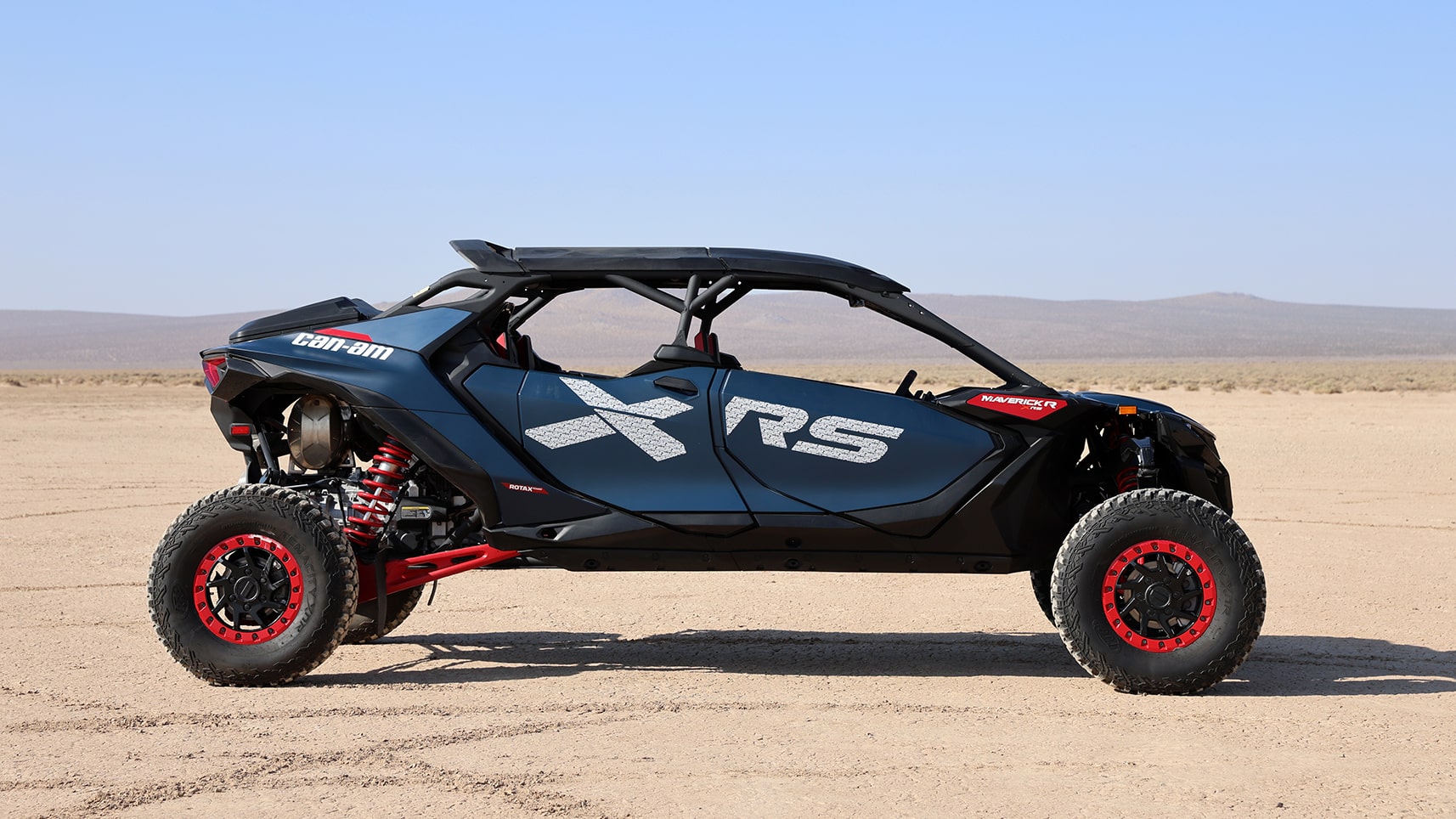
Can-Am Maverick R MAX Review: The 2025 Can-Am Maverick R MAX X RS with Smart-Shox is a large, high-output four-seat sport UTV built for open terrain and high-speed stability. Measuring 175 inches long and 78.1 inches wide with a 142.5-inch wheelbase, the Maverick R MAX platform sits firmly in the upper tier of the performance side-by-side segment.
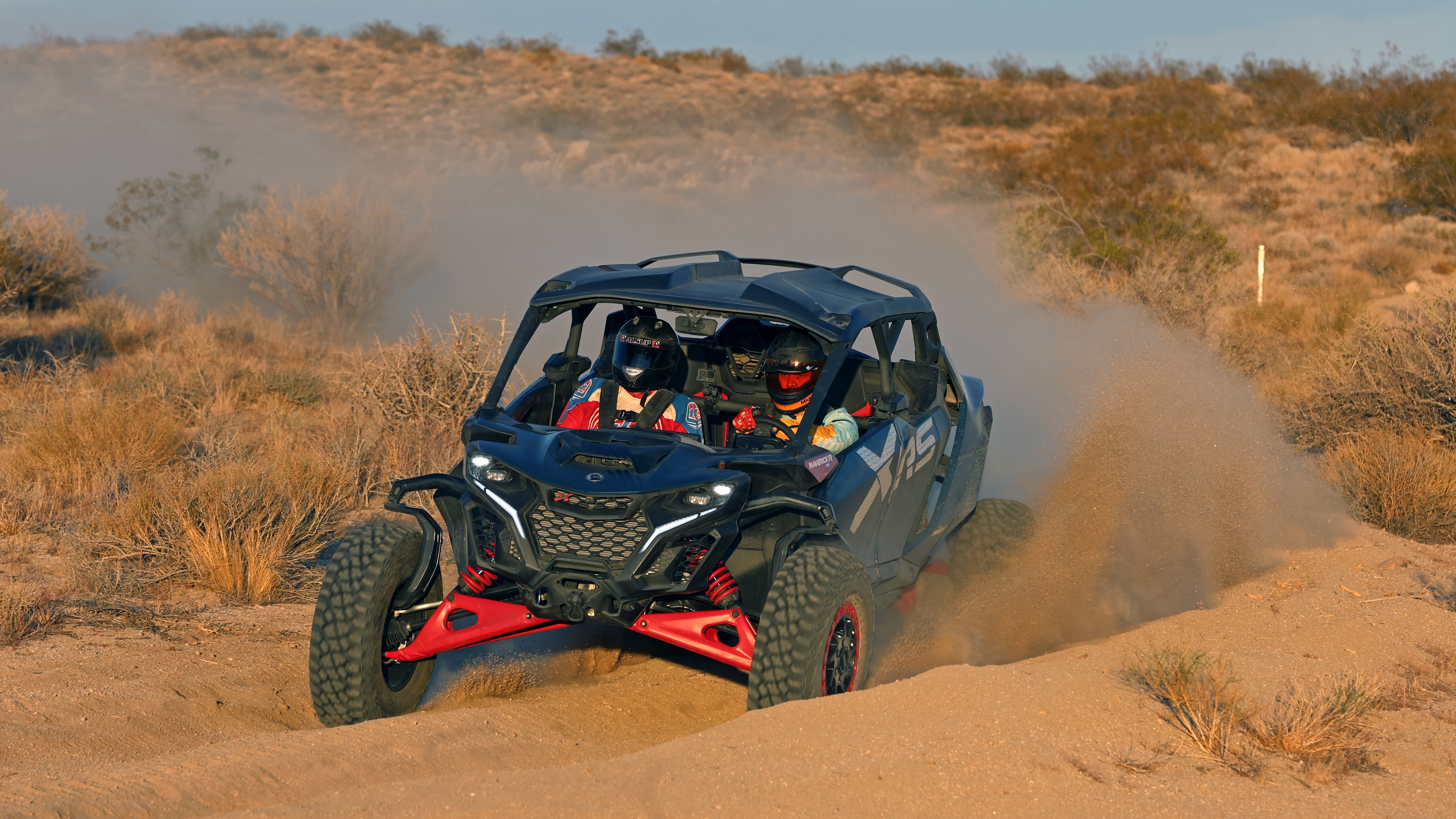
We’ve been driving this Maverick for more than a year, putting real miles on it through the Mojave Desert and on multiple trips to Johnson Valley OHV — terrain that hosts the King of the Hammers. That mix of high-speed desert runs, deep sand washes, rocky climbs, and extended trail mileage provides a clear picture of how the Maverick performs beyond a short test ride.

Powered by a turbocharged 999T Rotax engine producing approximately 240 horsepower and paired with a 7-speed dual-clutch transmission, it blends forced induction power with electronically adaptive suspension control.
Can-Am Maverick R MAX Review
Top Features
- 999T turbocharged Rotax engine producing approximately 240HP
- 7-speed dual-clutch transmission (DCT)
- FOX Smart-Shox with Live Valve Gen 3
- 24 inches of front and rear suspension travel
- 142.5-inch wheelbase
- 78.1-inch overall width
- 10.25-inch touchscreen display
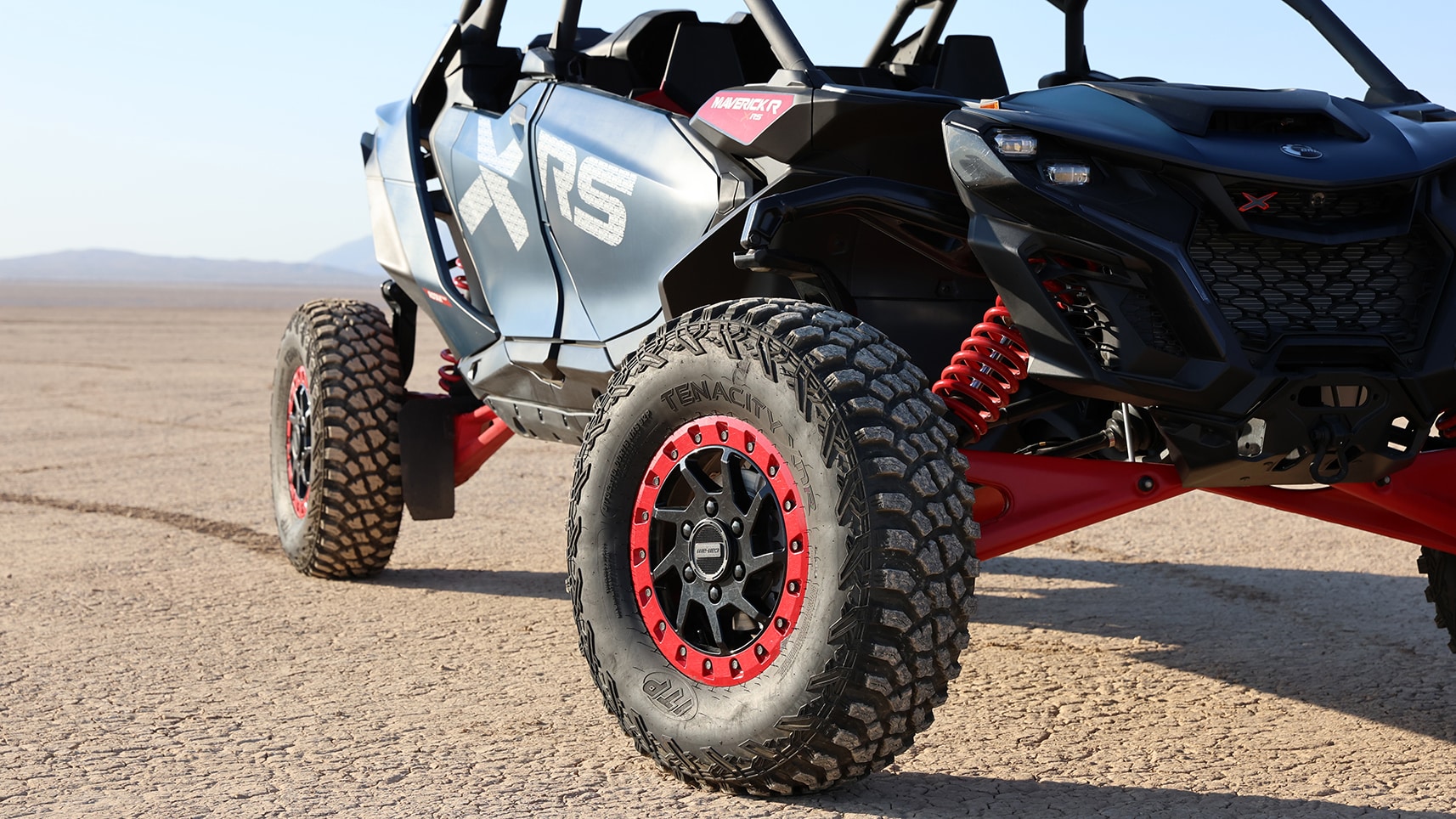
- 32-inch ITP Tenacity XNR tires
- Smart-Lok 4WD system
- Top speed tested at approximately 96 mph
Powertrain and Real-World Performance
Acceleration builds cleanly through the 7-speed DCT rather than surging through a belt. Gear changes are defined and mechanical, offering clear feedback under throttle. At lower speeds, the transmission can be loud and occasionally clunky, particularly around camp or during tight maneuvering.
As speed increases, the drivetrain settles down. Shifts smooth out, noise fades into the background, and the vehicle feels cohesive and composed. We recorded top speeds approaching 96 mph in favorable conditions, with the chassis remaining stable as speeds climbed.
Drive modes make a noticeable difference. Normal mode delivers smooth, predictable throttle response with more than enough power for most riding. Sport sharpens response, while Sport+ becomes aggressive and fuel-intensive. In Normal mode, fuel economy averaged 9–10 mpg. In Sport+, aggressive driving dropped that figure to 4–6 mpg. With a 13.2-gallon tank, range planning becomes part of ownership.
Can-Am Maverick R MAX Review
Suspension and Handling
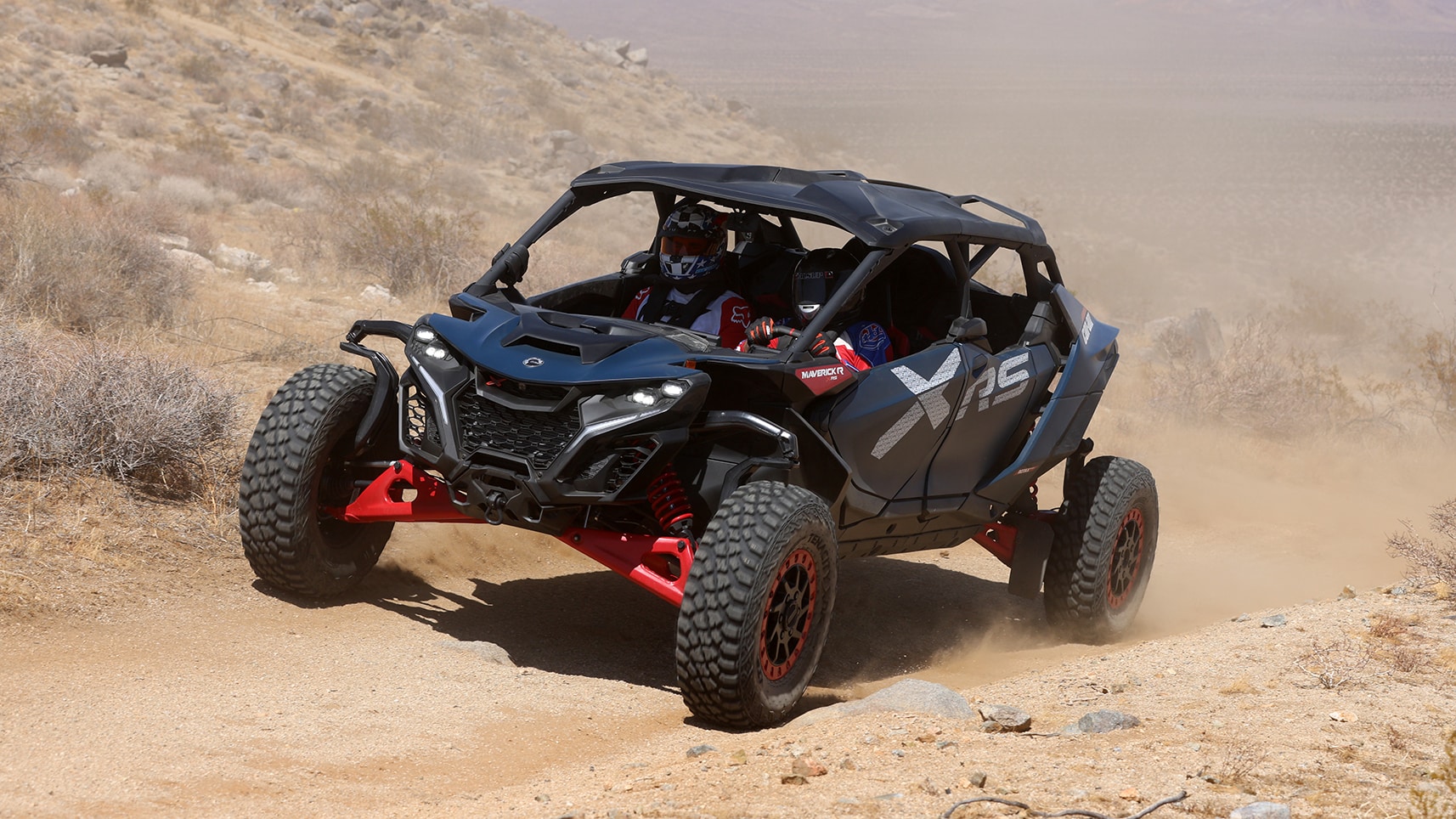
The Smart-Shox system with FOX Live Valve Gen 3 offers three suspension modes: Normal, Sport, and Sport+. After more than a year of Mojave Desert use and multiple Johnson Valley trips, the system has proven effective in managing terrain transitions without constant manual adjustment.
Normal mode is soft and plush with noticeable body roll. Sport reduces chassis movement, and Sport+ is best suited for aggressive driving through whoops and high-speed desert terrain.
Steering is precise and predictable. Despite the 142.5-inch wheelbase, the Maverick can feel surprisingly nimble at times. However, in quick transitions, the rear takes a moment to follow aggressive inputs — a reminder of its length. At speed, that same length improves stability and tracking.
Braking and Control
Braking performance requires break-in time. When new, pedal feel is soft and somewhat mushy, taking a few hundred miles to seat properly. Once broken in, performance improves and remains consistent.
The DCT contributes helpful engine braking, assisting deceleration when entering corners or descending grades. Overall control is balanced and predictable.
Interior, Storage and Visibility
Seating mirrors the Can-Am X3 platform with two mounting positions. The more upright position provides better steering feel and connection to the chassis, which we preferred.
The 10.25-inch touchscreen is functional and clear. A small compartment above the display securely holds a cell phone and includes multiple charging outlets.
Interior storage is limited for a vehicle this size. The passenger glovebox is shallow and can pop open on rough trails. Installing a rear trunk improves cargo capacity but eliminates bed space often used for a spare tire. Aftermarket spare mounts may obstruct rear visibility. While a backup camera is included, side mirrors are highly recommended.
For two-person rides, rear seats can store coolers and camera gear, but that option disappears when passengers are present.
Can-Am Maverick R MAX Review
Comparison
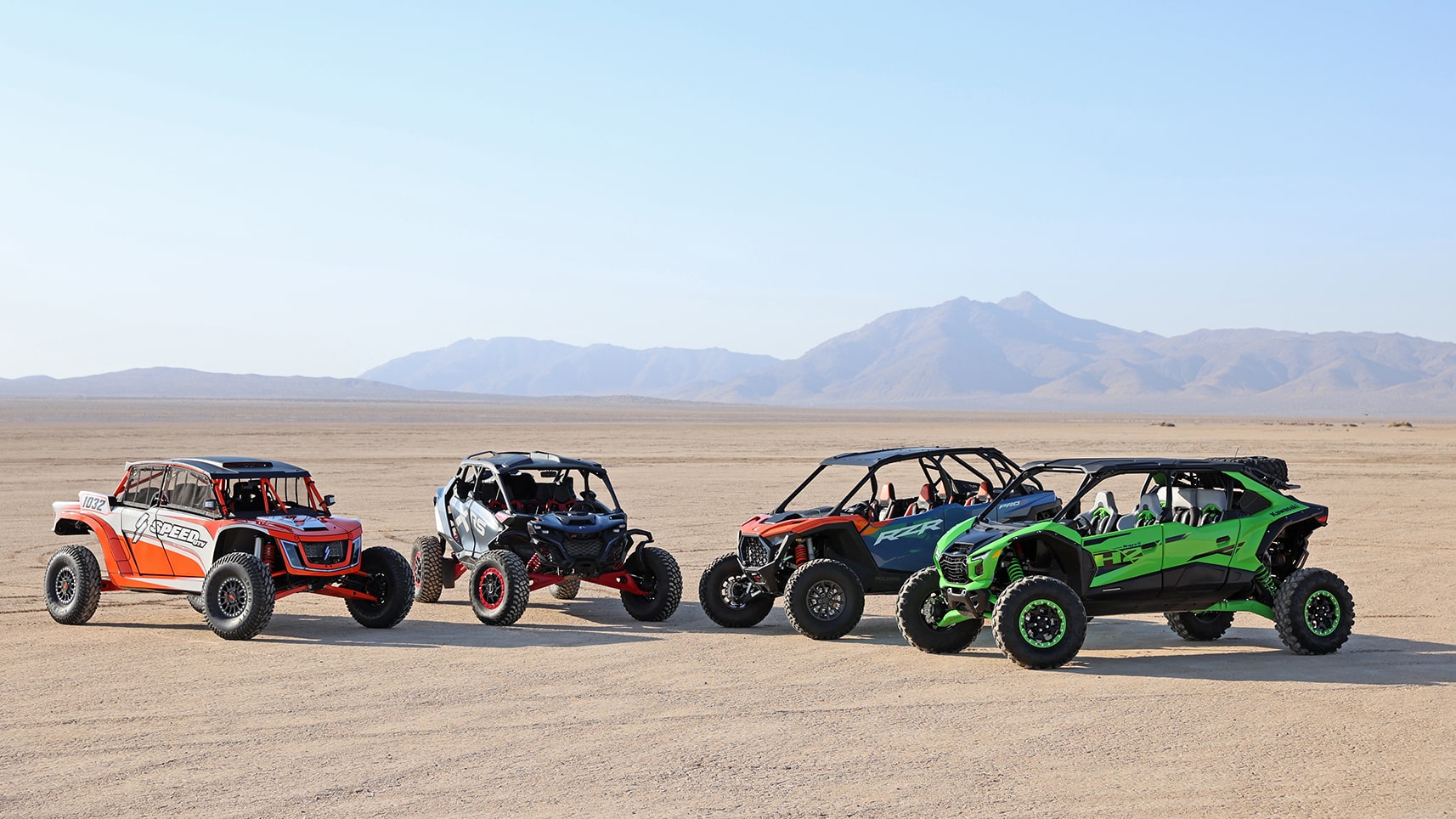
Polaris RZR Pro R 4 produces approximately 225 horsepower and rides on a 149-inch wheelbase, starting in the mid-$37,000 range. It emphasizes naturally aspirated durability and race pedigree.
Polaris RZR Pro S produces around 181 horsepower and starts in the mid-$20,000 range for two-seat trims. It is more compact but does not compete at the Maverick’s performance level.
Kawasaki Teryx H2 produces approximately 250 horsepower from a supercharged engine and starts in the mid-$40,000 range. It delivers dramatic power but carries more mass.
Speed UTV El Jefe 4 produces around 235 horsepower and generally starts in the low-to-mid $40,000 range, focusing on long-travel suspension and desert durability.
Honda Talon 1000R-4 produces approximately 105 horsepower and starts in the mid-$24,000 range, prioritizing durability and predictable power delivery over peak output.
Final Thoughts
The 2025 Can-Am Maverick R MAX X RS with Smart-Shox is a wide, high-output four-seat sport UTV designed for open terrain and speed. Its 240-horsepower turbocharged engine, 7-speed dual-clutch transmission, and adaptive Smart-Shox suspension create a performance-focused platform.
Storage and visibility require planning, particularly when carrying rear passengers, and fuel consumption reflects the Maverick’s performance-focused nature. It isn’t built around convenience — it’s built around speed and stability. For riders who prioritize high-output performance and drivetrain sophistication over utility compromises, it delivers exactly what it was designed to do.
Can-Am Maverick R MAX Review
Specifications
Engine & Drivetrain: Rotax 999T turbocharged inline three-cylinder, 999cc, liquid-cooled with intercooler, producing approximately 240 horsepower. Intelligent Throttle Control (iTC) with electronic fuel injection. Seven-speed dual-clutch transmission (DCT) with High and Extra-Low range. Selectable 2WD/4WD with Smart-Lok front differential. Integrated engine braking. 1,700-watt magneto output.
Suspension: Front double A-arm with sway bar and 24 inches of travel, FOX 2.5 PODIUM piggyback shocks with Smart-Shox Live Valve Gen 3. Rear 4-link trailing arm with 24 inches of travel, FOX 3.0 PODIUM piggyback shocks with Smart-Shox Live Valve Gen 3. Adjustable modes include Normal, Sport and Sport+.
Steering & Brakes: Tri-Mode Dynamic Power Steering (DPS) with tilt and telescopic steering wheel. Front 265 mm discs with 32 mm triple-piston hydraulic calipers. Rear 255 mm discs with 32 mm twin-piston hydraulic calipers.
Wheels & Tires: 32 x 10 x 16-inch ITP Tenacity XNR tires mounted on 16-inch aluminum beadlock-style flow-formed wheels.
Dimensions: 175 inches overall length, 78.1 inches width, 69.2 inches height, 142.5-inch wheelbase, 17 inches ground clearance. Estimated dry weight approximately 2,660 pounds.
Capacities: 13.2-gallon fuel tank, approximately 2.1 gallons interior storage, 200-pound rack capacity, four-passenger seating.
Protection & Technology: Full hard roof, premium half doors, heavy-duty skid plate, rock guards, front and rear tow hooks. 10.25-inch touchscreen display with integrated drive modes and Smart-Shox controls. Multiple USB and 12V outlets. Backup camera and RF Digitally Encoded Security System (D.E.S.S.).
Performance (Tested): Top speed approximately 96 mph. Real-world fuel economy averaged 9–10 mpg in Normal mode and 4–6 mpg in Sport+ under aggressive driving.