

Our 2027 Polaris RZR Pro R Boost Review takes us to Sand Hollow in Hurricane, Utah, where we spent approximately 60 miles behind the wheel of Polaris’ latest high-performance sport UTV. With 275 horsepower from a turbocharged 2.0-liter four-cylinder engine, the new Boost certainly has the numbers to grab your attention. But after blasting through dunes, tackling steep climbs, and crawling through technical terrain, horsepower wasn’t our biggest takeaway. The new RZR Pro R Boost might just be the quickest, smoothest, and best-handling production side-by-side we’ve driven.
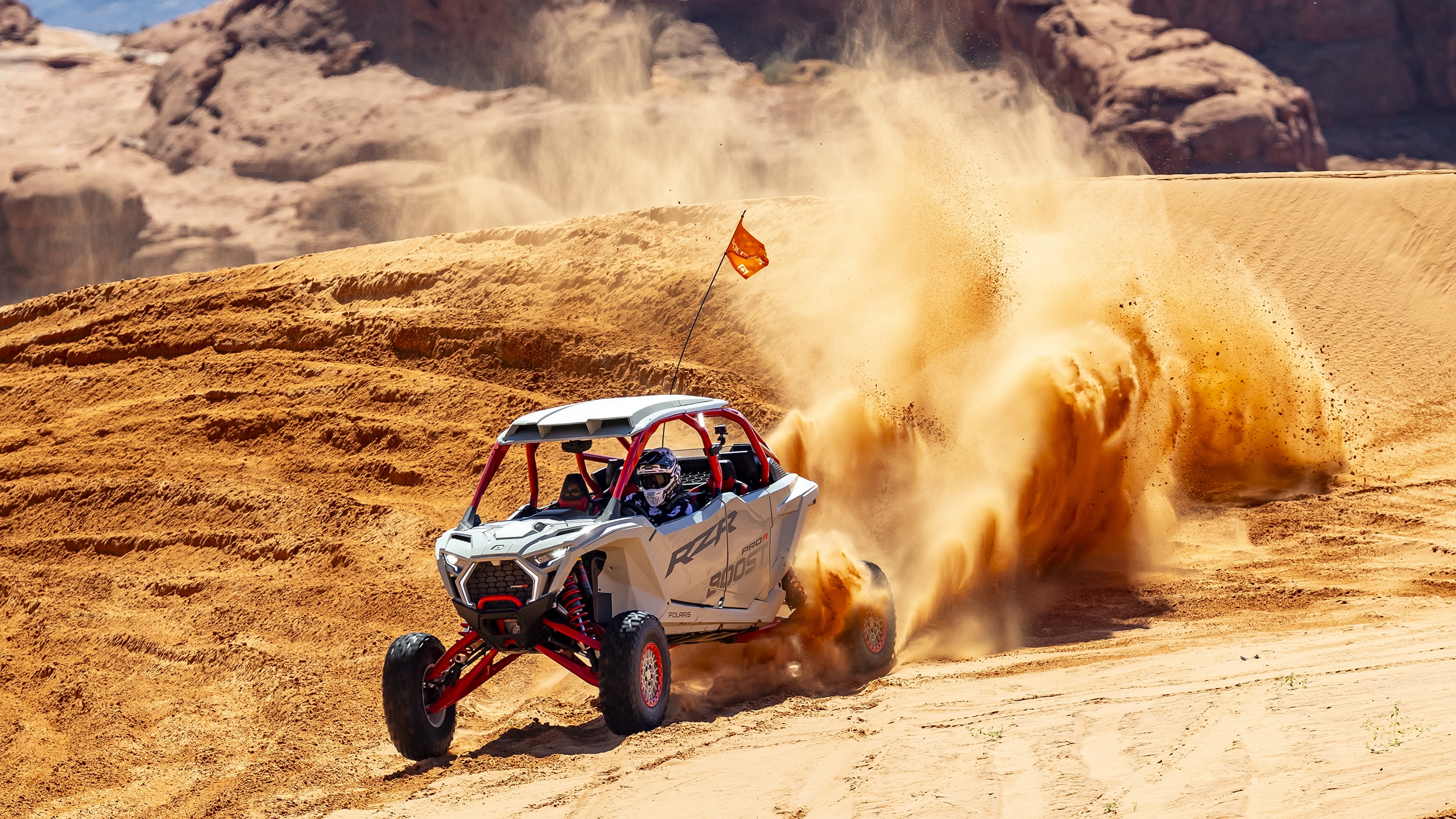
We’ve spent considerable time behind the wheel of today’s highest-performance UTVs, including our 2026 Polaris RZR Pro R 4 Ultimate, Can-Am Maverick R, and 2027 Kawasaki Teryx H2 Limited eS. Each has its strengths, but the Pro R Boost makes an exceptionally strong case for being one of the most complete performance packages available today.
We covered the engineering and initial specifications in our 2027 Polaris RZR Pro R Boost first look. Now that we’ve driven it, we can finally answer the more important question: Does adding 275 horsepower make the Pro R a better machine, or simply a faster one?
2027 Polaris RZR Pro R Boost Review
Top Features
- Turbocharged 1,997cc ProStar Fury four-cylinder producing 275 horsepower and 223 lb-ft of torque
- Upgraded CVT clutching, larger drive belt, and reinforced drivetrain
- FOX 3.0 Live Valve X2 shocks with DYNAMIX DV electronic suspension
- Four selectable suspension modes: Comfort, Rock, Track, and Baja
- Three engine power modes: Rock, Sport, and Race
- Available DYNAMIX DVS electronic sway bars on Ultra models
- 27 inches of usable front suspension travel and 29 inches rear
- 10.4-inch RIDE COMMAND touchscreen with Apple CarPlay compatibility
- Heated and ventilated seats and Rockford Fosgate Stage 4 audio
- 17.4-gallon fuel tank in the four-seat model
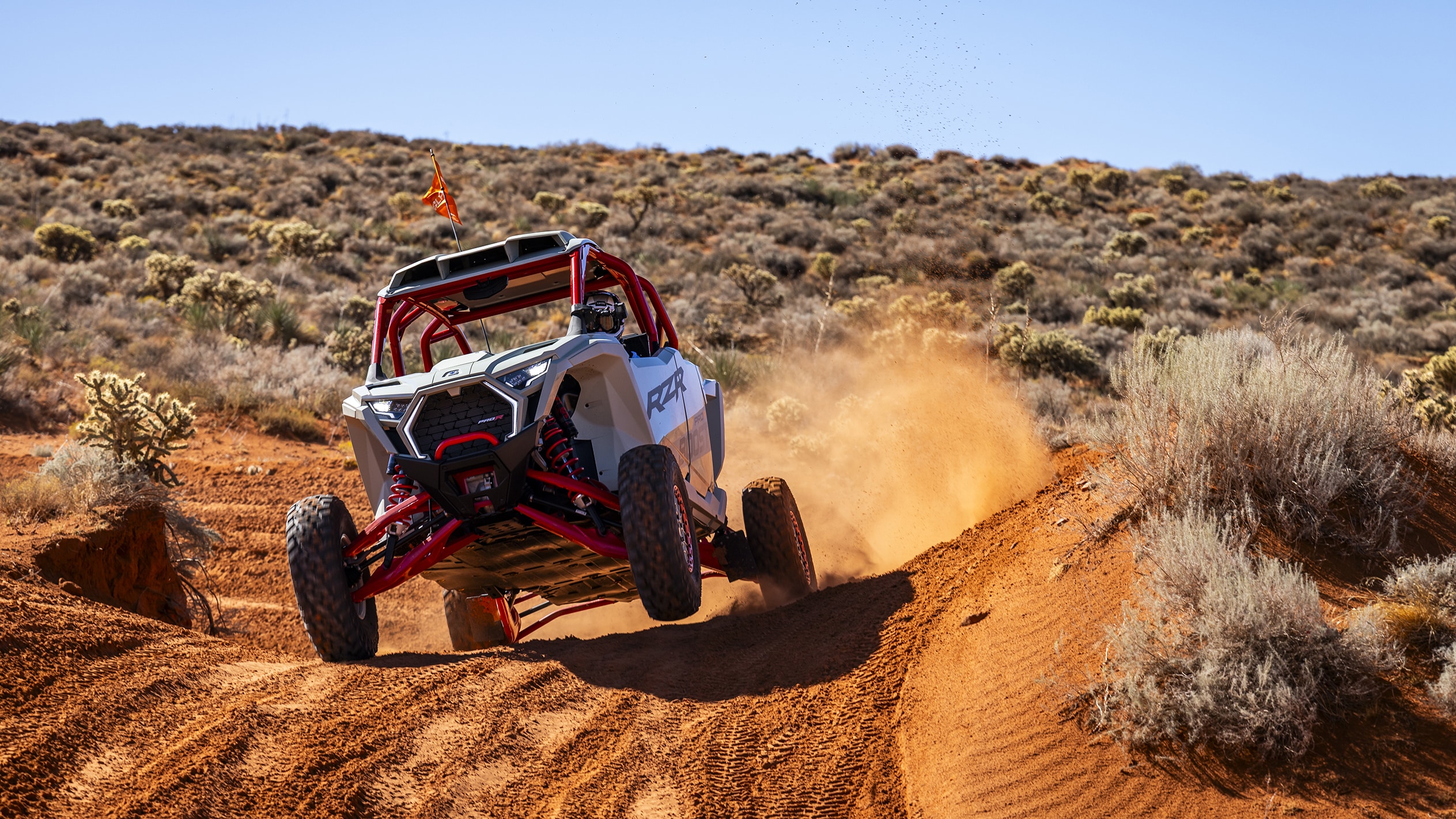
Sand Hollow First Drive
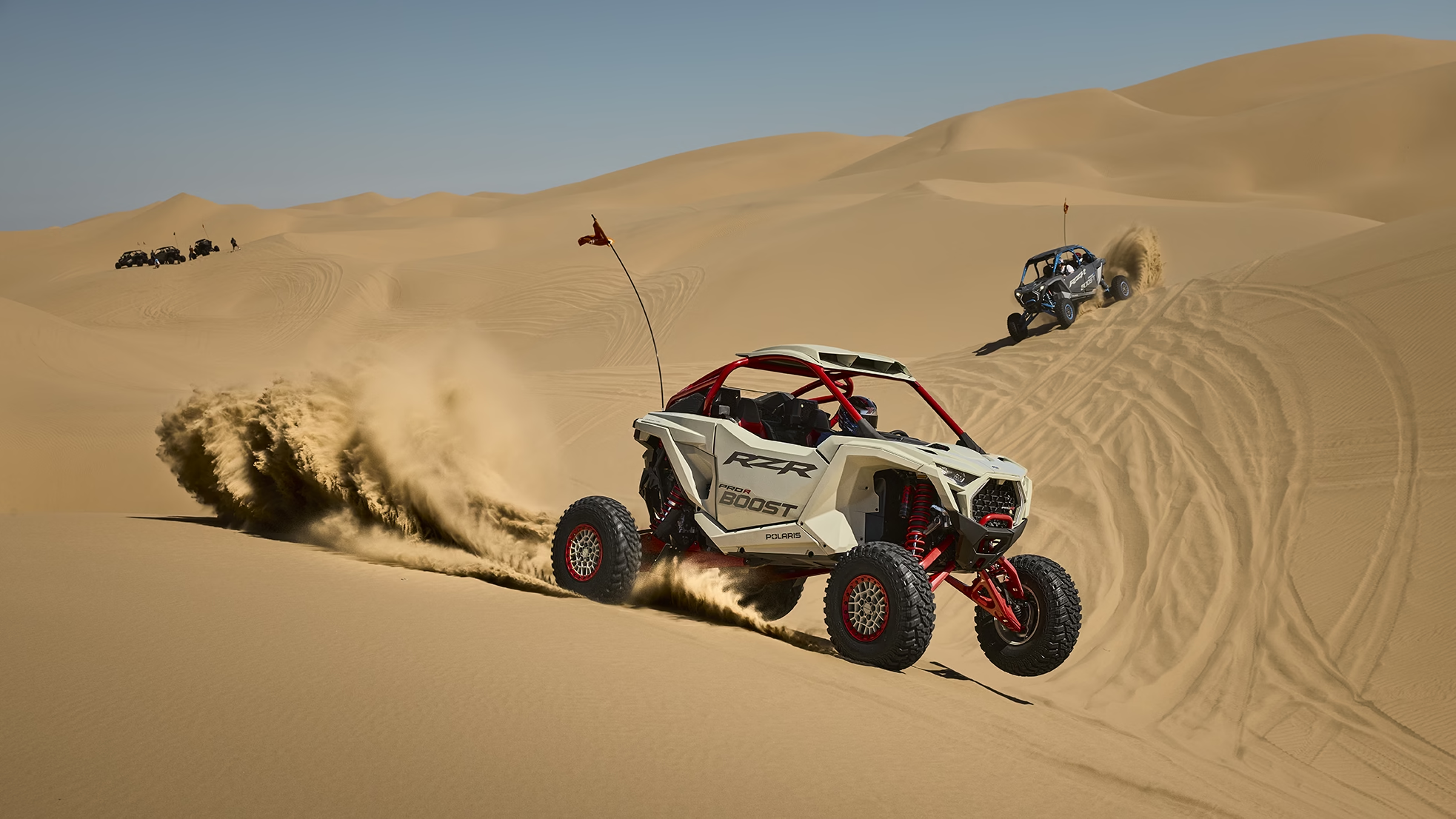
Sand Hollow is one of our favorite places to evaluate high-performance side-by-sides. Its combination of deep sand, sweeping dunes, steep climbs, and technical rock crawling provides an excellent opportunity to experience a vehicle’s capabilities across a wide range of terrain.
Our test vehicle was the four-seat Polaris RZR Pro R Boost Ultimate, and we went into the experience expecting some serious acceleration.
We certainly got that, but what surprised us most was just how refined the entire package felt.
The Boost is incredibly quick, yet the power delivery is smooth and controllable. Combine that with precise steering, excellent braking, and what might be the best electronically controlled suspension we’ve tested, and you have a machine that feels exceptionally well sorted.
Perhaps most impressive, we experienced all of this in the longer four-seat model, which rides on a 133.5-inch wheelbase and weighs a claimed 2,824 pounds dry.
Those aren’t small numbers, but the Boost certainly doesn’t feel like a machine struggling to carry its size.
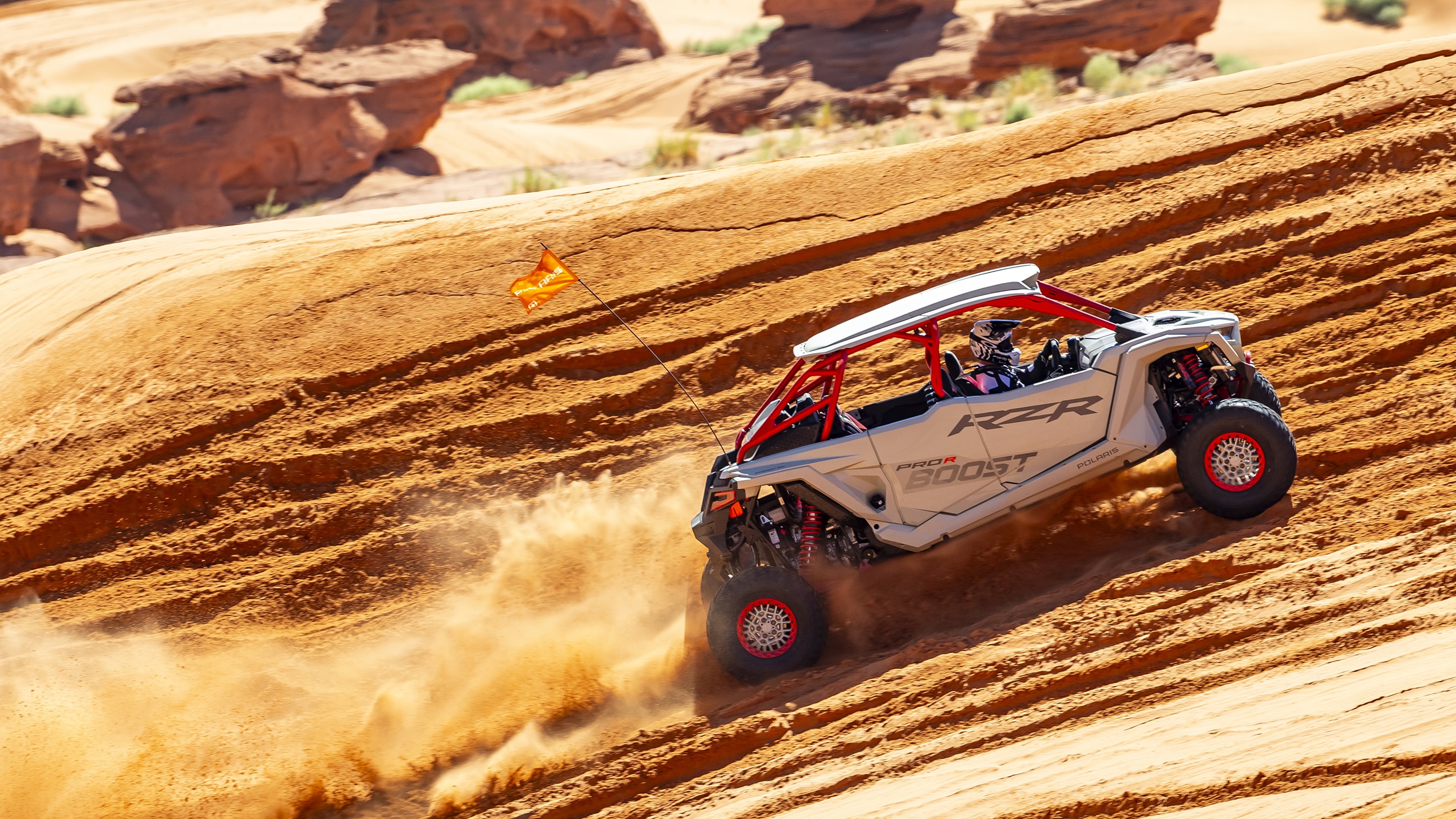
275 Horsepower: Instant Power Without Noticeable Turbo Lag
The headline feature of our 2027 Polaris RZR Pro R Boost Review is its turbocharged 2.0-liter four-cylinder engine producing an impressive 275 horsepower and 223 lb-ft of peak torque.
Polaris claims the engine produces 215 lb-ft of torque at just 4,000 rpm, giving the Boost substantial pulling power well before reaching its 7,000-rpm horsepower peak.
Coming from the naturally aspirated Pro R, the additional power is immediately noticeable. But what impressed us most wasn’t simply how fast the Boost accelerated. It was how effortlessly that power was delivered.
During our time at Sand Hollow, we couldn’t detect any noticeable turbo lag. Throttle response felt immediate, with an incredible amount of acceleration available whenever we needed it.
Whether climbing steep dunes or getting back on the gas through sweeping turns, the Boost delivered smooth, predictable power that was surprisingly easy to control.
Compared with the Can-Am Maverick R, the Boost felt noticeably quicker. That’s saying something considering how impressive the Maverick R already is.
We haven’t conducted instrumented acceleration testing between the two machines, so we’ll save definitive performance numbers for a future comparison. But from behind the wheel, the additional power was impossible to ignore.
There’s a difference between building a machine that produces a lot of horsepower and building one that allows the driver to confidently put that horsepower to use. Polaris has managed to do both.
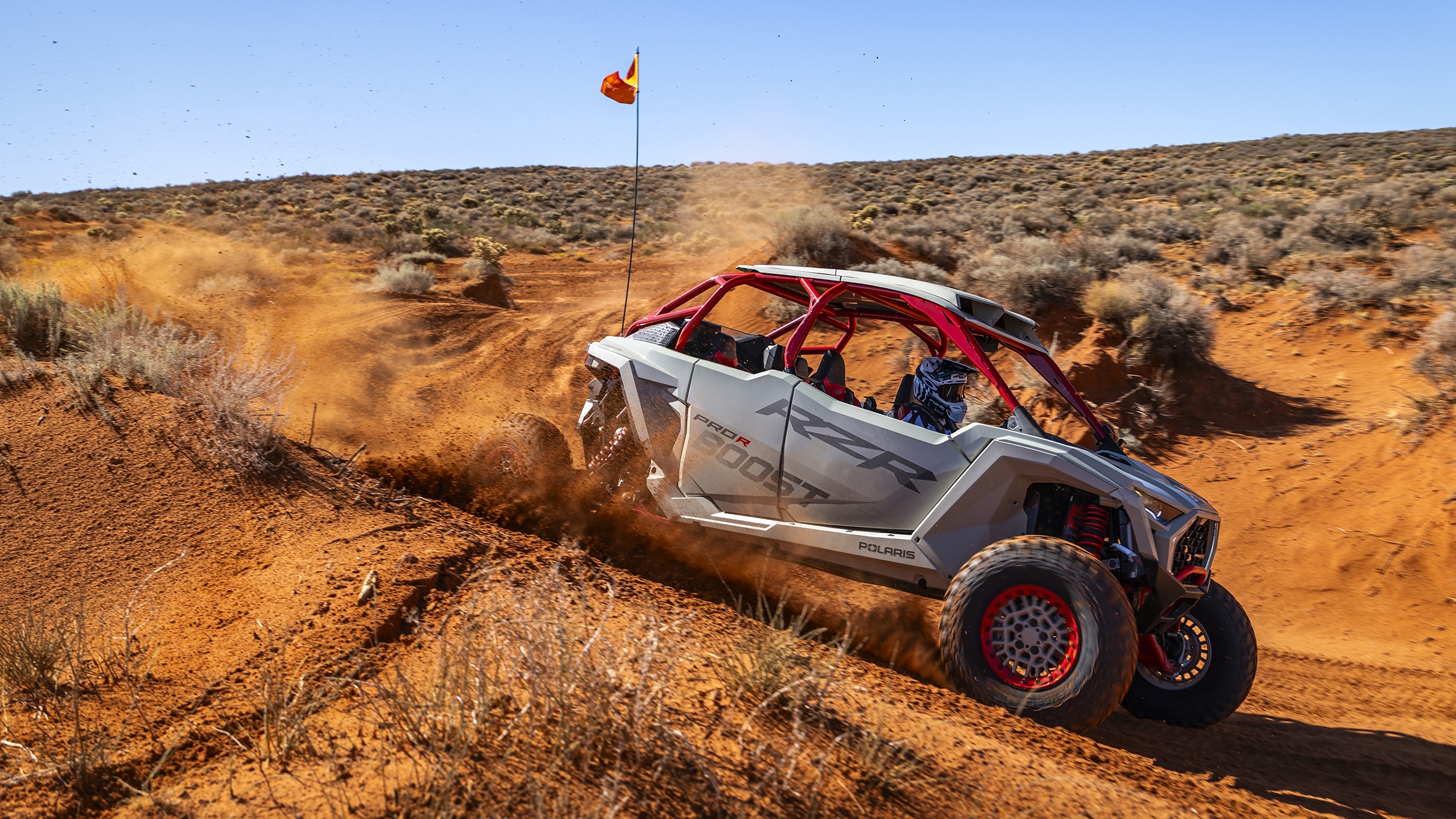
DYNAMIX DV Suspension: The Real Star of the Show
As impressive as the 275-horsepower engine is, the suspension might be what impressed us most during our time at Sand Hollow.
Our Pro R Boost Ultimate was equipped with electronically controlled FOX 3.0 Live Valve X2 shocks and Polaris’ DYNAMIX DV suspension system.
Unlike conventional electronically adjustable shocks that simply offer a few fixed damping settings, DYNAMIX DV can continuously adjust compression and rebound damping independently based on vehicle inputs and conditions.
The system makes adjustments up to 200 times per second, while giving the driver four selectable suspension modes: Comfort, Rock, Track, and Baja.
Throughout our drive, we found ourselves constantly switching settings depending on the terrain.
Whether we wanted a smoother ride over smaller chop, additional support through larger G-outs, or more chassis control while cornering, the ability to quickly change the suspension’s behavior was something we genuinely appreciated.
The result was an incredibly smooth ride without sacrificing the handling precision needed to take advantage of the Boost’s additional horsepower.
That’s a difficult combination to achieve, and Polaris has done an exceptional job finding the balance.
In fact, we’d go as far as saying this might be the best electronically controlled suspension system we’ve tested to date.
What makes the experience even more interesting is that we were driving the Ultimate, not the top-of-the-line Ultra.
The Pro R Boost Ultra adds electronically controlled active sway bars through its DYNAMIX DVS system, providing another level of control over body roll and suspension articulation.
Considering how impressed we were with the Ultimate, we can’t wait to get behind the wheel of the Ultra and see what those electronic sway bars bring to the table.

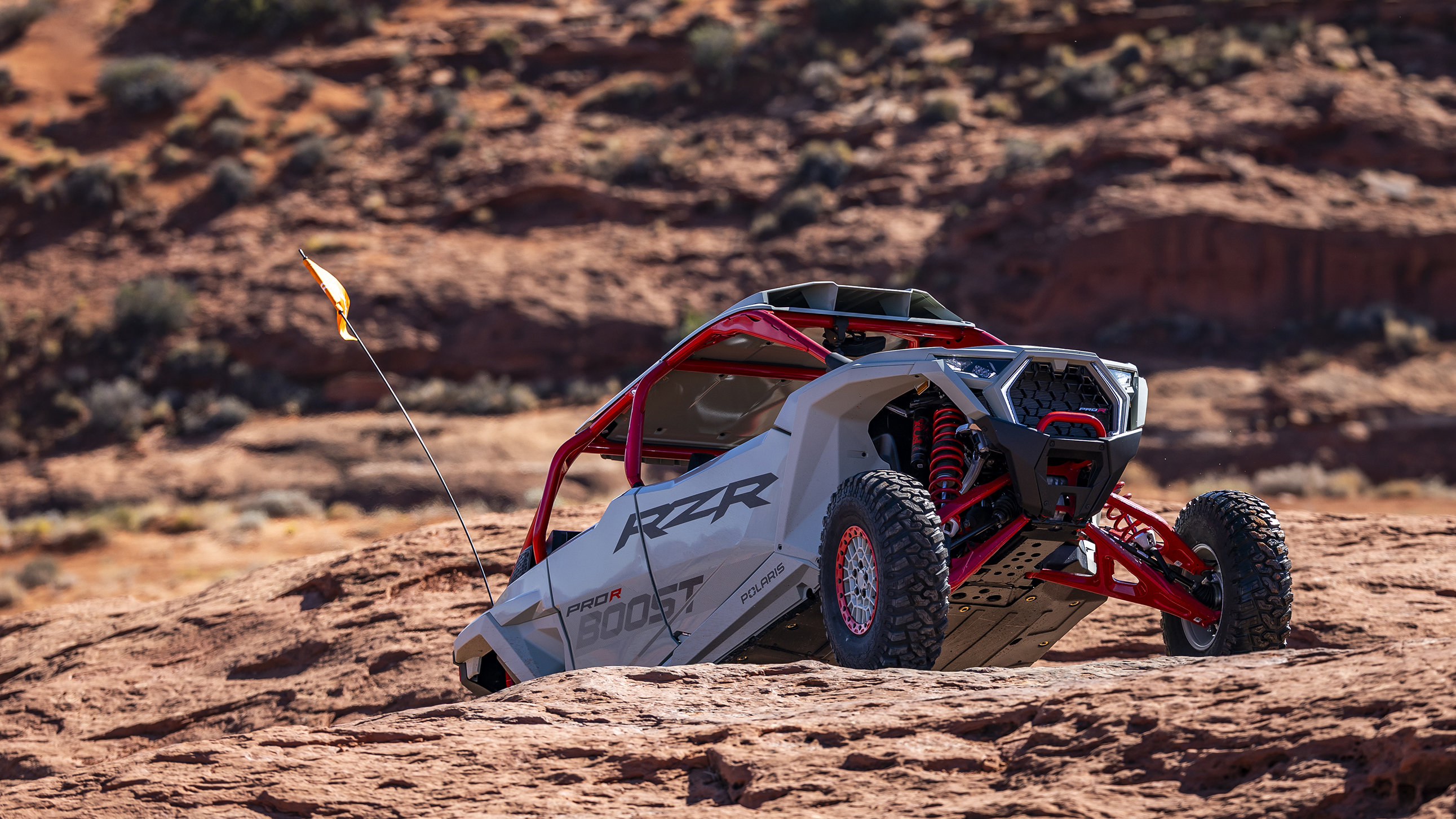
Rock Mode: 275 Horsepower Meets Precision
With 275 horsepower on tap, it’s easy to assume the Polaris Pro R Boost is happiest blasting through dunes at full throttle. But one of the biggest surprises during our Sand Hollow test was just how capable the four-seat Ultimate was when things slowed down.
We spent considerable time using Rock mode in both the engine power delivery and suspension settings, and the results were impressive.
The throttle response was incredibly manageable, allowing us to precisely control the vehicle while navigating steep, technical terrain.
What really stood out was the ability to crawl up just about anything we encountered at virtually any speed.
Rather than fighting the horsepower, we could take advantage of the engine’s smooth delivery and let the suspension do its job.
Clutch engagement remained smooth and predictable, with no noticeable jerking or hesitation.
Being able to quickly transition from aggressive dune driving to technical rock crawling without leaving the driver’s seat is one of the things that makes the Boost so versatile.
It’s impressive enough to build a 275-horsepower machine that’s incredibly fast. Making that same machine feel this controlled and capable while rock crawling is another achievement entirely.
Clutching and Belt Temperatures: How Did the Boost Hold Up?
With 275 horsepower available, clutching and belt temperatures are always going to be a concern, especially when spending an entire day running through deep sand and technical terrain.
Polaris has addressed the additional power with substantial drivetrain upgrades, including a larger belt, revised high-capacity clutching, increased cooling airflow, a strengthened transmission, and reinforced half shafts.
According to Polaris’ official RZR Pro R Boost information, the redesigned clutching uses a 48-curved-fin configuration to improve cooling, while the updated transmission incorporates active cooling.
Those improvements look promising on paper, but we were more interested in how the system performed in real-world conditions.
Fortunately, the Pro R Boost Ultimate never gave us a reason to worry.
From crawling through rocky sections in Rock mode to accelerating hard through the dunes, clutch engagement remained smooth and predictable. We experienced no jerking, hesitation, or belt-related issues at any speed.
One feature we particularly appreciated was the belt-temperature gauge, which allowed us to monitor the drivetrain throughout the day.
Despite the variety of terrain and driving conditions, the gauge never climbed above the halfway mark.
That’s impressive considering the horsepower and the demands that deep sand can place on a CVT system.
Of course, a gauge reading below halfway isn’t the same as recording actual belt temperatures, and 60 miles isn’t enough to establish long-term durability.
But our initial experience was extremely positive, and we’re looking forward to seeing how the system holds up during extended testing.
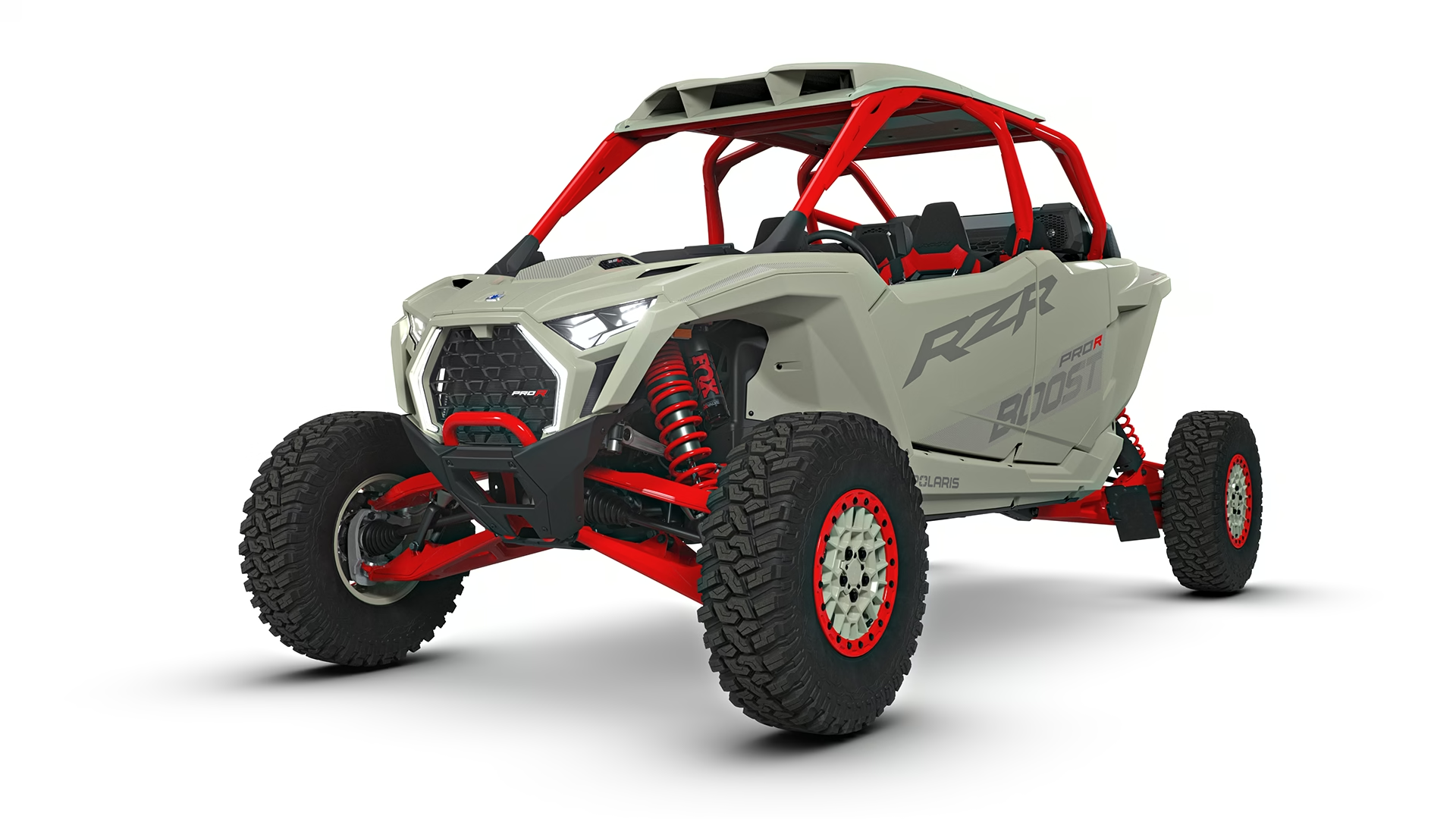
2027 Polaris RZR Pro R Boost Review
Handling and Braking: Does the Four-Seat Boost Feel Too Big?
With so much power available, steering precision and chassis control become more important than ever.
Fortunately, the Pro R Boost delivers.
Steering is precise and responsive, allowing the driver to confidently place the vehicle where intended. Whether navigating sweeping turns or changing direction through the dunes, the Boost responds quickly without feeling nervous or unpredictable.
What impressed us most was how well the suspension and steering worked together.
The chassis remained composed over rough terrain, and the ability to adjust suspension settings on the fly made it easy to tailor the vehicle’s behavior to the conditions.
The brakes were another highlight, delivering excellent stopping power to match the impressive acceleration.
Considering that our test vehicle was the four-seat Ultimate, the overall handling was particularly impressive.
The longer wheelbase provides a stable platform, yet the vehicle never felt unnecessarily cumbersome during our time at Sand Hollow.
Taken together, the Pro R Boost offers one of the most complete combinations of power, suspension, steering, and braking we’ve experienced in a production sport UTV.
Interior Comfort and Technology: The Boost Feels Like the Future
One of the biggest surprises during our Sand Hollow drive was just how quiet, comfortable, and refined the new Pro R Boost felt.
The cockpit is remarkably civilized, and the overall experience feels every bit as modern as you’d expect from a 2027 model.
From the massive, almost Tesla-like center display to the impressive fit and finish, audio system, and thoughtful cockpit layout, Polaris has created an interior that feels a generation ahead of many of its competitors.
The centerpiece is a 10.4-inch touchscreen powered by Polaris RIDE COMMAND, which includes integrated navigation, configurable vehicle information, and group-riding features.
Apple CarPlay compatibility is another welcome addition. During our Sand Hollow drive, we used CarPlay to run the onX Offroad app directly through the vehicle’s display.
Having access to an app we already use for navigation is a huge advantage, especially when exploring unfamiliar terrain.
Polaris has indicated that Apple CarPlay functionality is scheduled for a future software update on customer vehicles, so buyers should confirm availability before taking delivery.
That’s not to take anything away from Polaris RIDE COMMAND, which remains one of the best factory navigation and infotainment systems in the UTV industry.
The Rockford Fosgate Stage 4 audio system was another highlight, delivering an impressive listening experience that complements the vehicle’s surprisingly quiet cockpit.
And then there are the seats.
The Boost features ventilated seating, and we genuinely appreciated during our time at Sand Hollow. With temperatures climbing, the additional airflow was a welcome relief while spending hours behind the wheel.
Polaris has also reworked the cooling arrangement, moving the main engine radiator to the rear and using a separate front cooling circuit for the turbocharger’s charge-air system and transmission.
Combined with improved airflow management and cabin ventilation, the new design contributes to a noticeably more comfortable driving environment.
It’s an impressive level of refinement for a machine capable of this much performance.
Polaris RZR Pro R Boost vs. Can-Am Maverick R
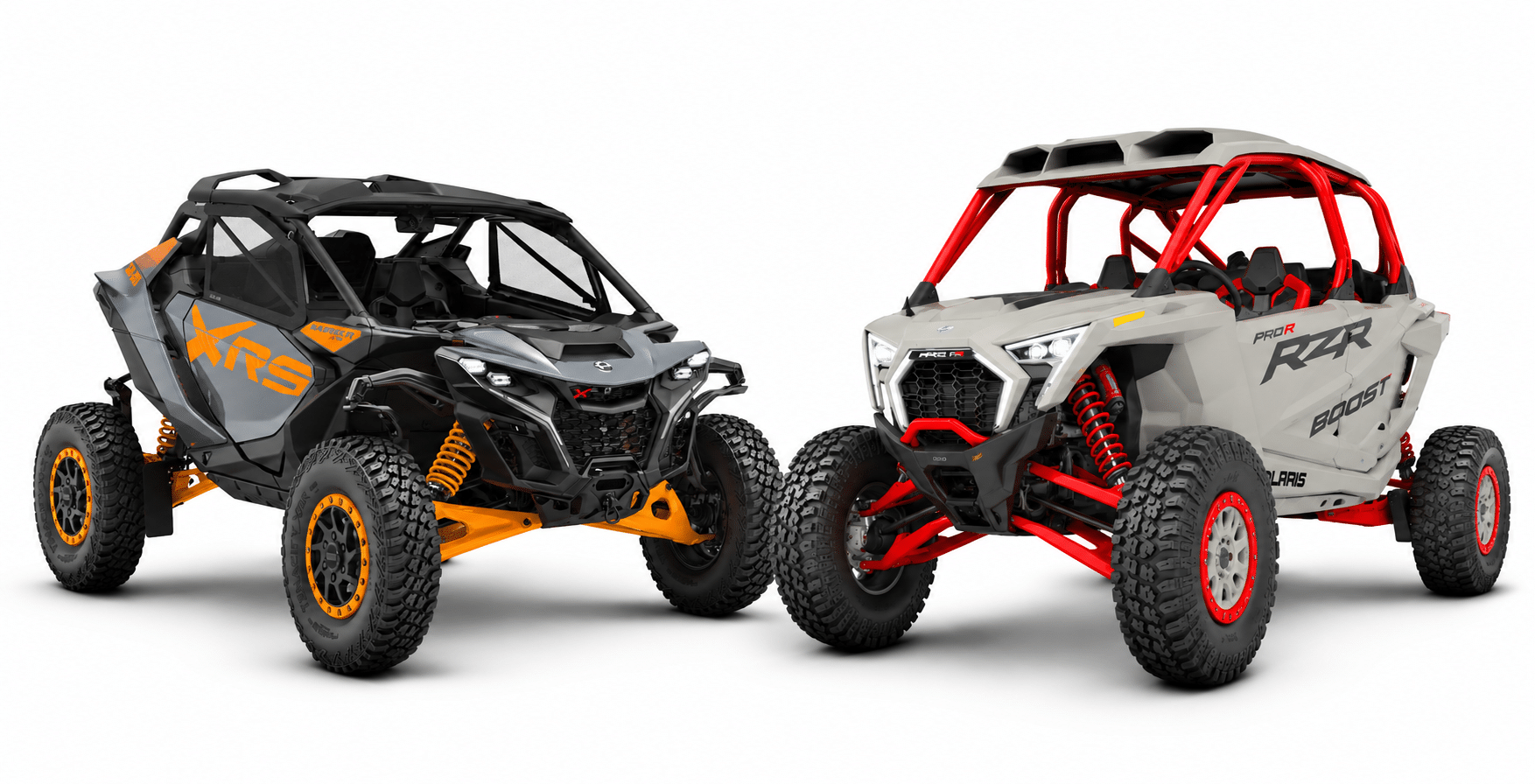
Having spent considerable time behind the wheel of the Can-Am Maverick R, we were particularly interested in how the new Boost would compare.
In terms of acceleration, the Polaris felt noticeably quicker.
The Boost also impressed us with its exceptionally smooth suspension, precise steering, and surprisingly quiet cockpit.
However, the Maverick R still has some qualities we prefer.
The Can-Am feels more planted, with a lower, more integrated seating position that makes the driver feel like they’re sitting inside the vehicle rather than on top of it.
That feeling of being wrapped into the chassis is difficult to replicate, and it remains one of the Maverick R’s strongest attributes.
The Polaris, meanwhile, delivers an outstanding combination of acceleration, suspension adjustability, and overall comfort.
And when it comes to cockpit technology and refinement, the Boost has a clear advantage in our opinion.
While the Maverick R remains an incredible performance machine, its interior feels like something from 2018 compared with the Boost’s modern display, premium audio, ventilated seats, and overall presentation.
It’s an interesting contrast.
The Maverick R delivers a more connected, race-car-like seating position, while the Boost offers a quieter, more comfortable, and considerably more modern driving environment.
For more on the Can-Am’s strengths and weaknesses, see our 2024 Can-Am Maverick R X RS review, where we cover its seven-speed dual-clutch transmission, suspension, handling, and real-world performance.
If we could combine the Maverick R’s seating position with the Boost’s technology and refinement, we’d have something pretty special.
2027 Polaris RZR Pro R Boost Review
Final Thoughts: Is the 2027 Polaris RZR Pro R Boost Worth It?
After 60 miles behind the wheel at Sand Hollow, we’re convinced the 2027 Polaris RZR Pro R Boost is one of the most impressive sport UTVs we’ve driven. The combination of 275 horsepower, exceptional FOX Live Valve suspension, smooth clutching, and a remarkably refined cockpit makes this machine much more than just another horsepower upgrade.
Pricing starts at $49,999 for the two-seat Ultimate and $53,999 for the four-seat Ultimate we tested. The Ultra models climb to $52,999 and $56,999, respectively, before destination fees and taxes.
That’s serious money, but the Boost delivers serious performance to match. We’re looking forward to spending more time in the two-seat model during our long-term testing in 2027. For now, Polaris has raised the bar, and the competition has some catching up to do.
2027 Polaris RZR Pro R 4 Boost Ultimate Specifications
| Specification | Four-Seat Ultimate |
|---|---|
| Engine | 1,997cc turbocharged inline-four |
| Horsepower | 275 hp |
| Peak Torque | 223 lb-ft |
| Transmission | Automatic PVT, High/Low |
| Drive System | 2WD / 4WD / 4WD Lock |
| Suspension | FOX 3.0 Live Valve X2 / DYNAMIX DV |
| Front Suspension Travel | 27 in. usable |
| Rear Suspension Travel | 29 in. usable |
| Tires | 32 x 10-15 Pro Armor Trekker |
| Wheelbase | 133.5 in. |
| Width | 74 in. |
| Ground Clearance | 16 in. |
| Estimated Dry Weight | 2,824 lbs |
| Fuel Capacity | 17.4 gal. |
| Seating | Four |
| Starting MSRP | $53,999 |
Specifications are manufacturer-published figures for the 2027 four-seat Boost Ultimate. Equipment and pricing may vary by configuration.
Frequently Asked Questions
Does the 2027 Polaris RZR Pro R Boost have turbo lag?
We couldn’t detect any noticeable turbo lag during our 60-mile test at Sand Hollow. Throttle response felt immediate and predictable, whether accelerating through the dunes or navigating technical terrain.
How much horsepower does the Polaris RZR Pro R Boost produce?
The turbocharged 2.0-liter ProStar Fury four-cylinder produces a claimed 275 horsepower and 223 lb-ft of peak torque.
What’s the difference between the Boost Ultimate and Ultra?
Both share the 275-horsepower turbocharged engine. The Ultimate uses DYNAMIX DV electronic suspension, while the Ultra adds DYNAMIX DVS with electronically controlled active sway bars, along with additional performance and appearance upgrades.
How did the Boost’s CVT perform in the sand?
We experienced no belt-related problems, jerking, or hesitation during our test. The belt-temperature gauge remained below halfway throughout the day, although extended testing will be necessary to evaluate long-term durability.
Is the Polaris RZR Pro R Boost better than the Can-Am Maverick R?
The Boost felt quicker during our drive and offered a more refined cockpit and exceptional suspension performance. However, we still prefer the Maverick R’s lower, more integrated seating position. A controlled back-to-back comparison will be needed to determine an overall winner.